
The Overlooked Event Timing Mistake That Costs You Sales
We once booked an event for the same weekend as Wimbledon and a football final. It turned out to be a fairly instructive event timing mistake, though I did not think of it that way at the time. Ticket sales were much harder than usual. Everybody had somewhere else to be, glued to a different sort of screen entirely.
My husband and I had already committed to the date before we noticed the clash, so there was no changing it. We sold out in the end, no refunds needed, but it took a great deal more work than it should have.
That is the lesson I have carried since. It is never just the date itself that decides whether people show up. It is everything that happens in the weeks either side of it. Most people market the big day and nothing else, then wonder why nobody was paying attention when it mattered. If you run any kind of online business, this applies to you too. The weeks before and after your next launch, sale or event might matter more than the day itself does.
Why the Big Day Is the Least Important Part
I think most of us treat a launch, a sale or an event as a single appointment. You mark the date, you build up to it a little, and on the day you post about it properly. Then it is over and you move on to the next thing.
That pattern misses two thirds of the opportunity. Attention around any event, whether it is a product launch, a seasonal sale or a live webinar, tends to move in three distinct stages. Those stages are before, during and after. Each one attracts a different kind of interest, and each one rewards different content.
It is never just the date itself that decides whether people show up.
Our Wimbledon clash taught me this the hard way. We had marketed our event as if the date alone would carry it. It did not. What we were competing against, without realising it, was everyone else’s anticipation, already built weeks before we started ours.
What Happens Before Anyone Notices You Have Launched Anything
Before an event, people are curious rather than ready to buy. They want predictions, previews, schedules and a reason to start paying attention early.
For an online business, this might mean sharing what is coming a few weeks out, without asking for the sale yet. A short preview email. A behind the scenes note about what you are building. A simple countdown that gives people something to look forward to rather than something to ignore.
This is also where your list matters more than your launch day ever will. Someone who has been warmed up for three weeks behaves very differently to someone who sees your offer for the first time on the day itself. I have watched that difference play out in our own numbers more than once.
When we run the Internet Marketing Newsletter launch, the same pattern holds. We start recruiting affiliates six to eight weeks before the doors open, well before anyone outside sees a single email. By the time launch day arrives, the audience isn’t cold. They have been anticipating it for weeks, and that groundwork is what makes the day itself work at all.
I have written about building that kind of steady groundwork before, in other articles I have shared recently. It is worth returning to before your next launch rather than after it.
What To Do While Everyone Is Actually Watching
During the event itself, the content changes completely. Now people want reactions, live updates and a reason to act before the window closes.
This is where scarcity and momentum do their proper work. A countdown that has already been building for three weeks feels very different to one that appears out of nowhere on the day. People who have been anticipating something are far more likely to act on it when it finally arrives.
During the launch, we lean on the same mechanics: a live leaderboard, a countdown that has been ticking for weeks, and a genuine deadline. Day one and the closing day are always the busiest, because scarcity and a bit of competition between affiliates does the rest.
I know what some of you are thinking here. I just do not have the time to plan three separate stages for one small launch. Fair enough. You do not need three separate campaigns from scratch. Think of it as one idea, told three different ways, at three different points: a preview email, a live countdown, and a short recap afterwards. That is a much smaller job than it sounds. It is often enough on its own to fix the event timing mistake that catches most people out.
The Stage Almost Everyone Forgets Entirely
Once the event is over, most people stop. That is the mistake. People do not stop being curious the moment the offer closes. They still want highlights, results and a sense of what happened.
This afterglow stage is quietly valuable. It reaches people who were watching but did not act. It also gives your existing subscribers a reason to stay engaged rather than drift off until your next announcement. A short recap email. A results update. A note about what you learned running the event, including what went less smoothly than planned.
We send a short recap the week after every launch: what worked, what the numbers looked like, and what we would do differently next time. It costs half an hour and keeps subscribers reading instead of waiting for the next big announcement.
Our sold out Wimbledon weekend is a decent example of this in reverse. We never went back afterwards and told people it had worked out despite the clash.
We simply moved on.
Looking back, that was a missed opportunity to build trust with the people who had bought, and to warm up the ones who had not.
Where This Becomes A List Building Problem, Not Just A Timing One
None of this works without somewhere to send the anticipation, the reactions and the recap.
That somewhere is your list.
If you are still relying mainly on social platforms to carry people through all three stages, you are handing that timing advantage to an algorithm. It owes you nothing. An email list you actually own behaves the same way in three weeks as it does today.
This is exactly the sort of groundwork Lazy Way To Email Riches is built around. It means getting a proper list building system in place before you need it. That beats scrambling to build one the week before your next launch. If building that foundation is the piece you have been putting off, it is worth a look before your next event rather than during it.
Timing The Weeks, Not Just The Day
I think the real shift here is a small one. Stop asking what you will post on the day. Start asking what your audience will want to know three weeks before it, during it, and three weeks after it has finished.
That single question would have saved us a fair amount of effort the year we booked around Wimbledon. It sold out anyway, but it did not need to be that hard. The event timing mistake isn’t really about the date at all; it is about everything left unplanned around it.
Best wishes for now,
Kate James
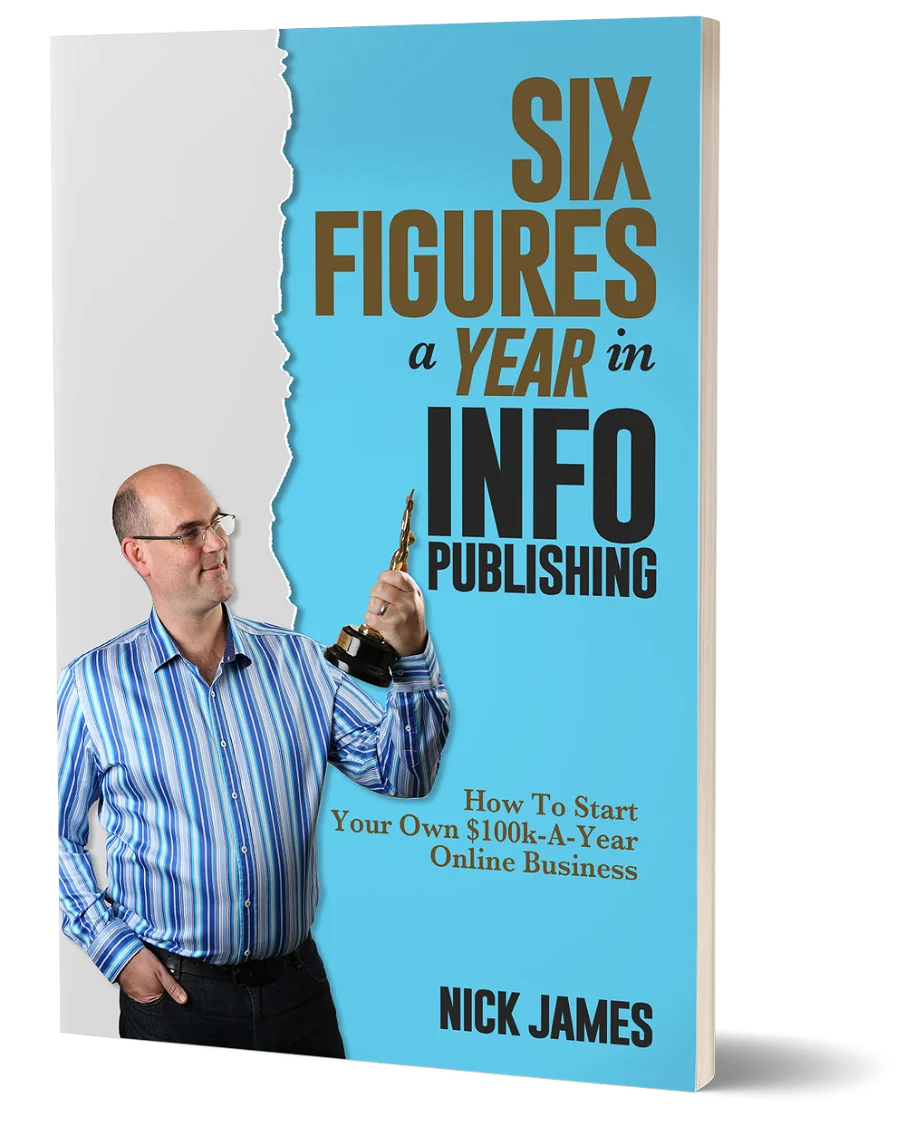
Author offers a FREE copy of this book to his next door neighbor... to prove he's not a drug dealer!
Now claim your FREE COPY.
and follow the step-by-step instructions for making the kind of money (and living the kind of lifestyle) that'll get your neighbors curtains twitching with curiosity!
Enter your details below to discover how to claim your FREE COPY of 'Six Figures A Year In Info Publishing' ...
Privacy Policy : We value your privacy. You can unsubscribe from receiving future emails with 1 click at any time.