Why Does Real Customer Proof Beat Overlooked Clever Copy?
Most of us assume a sale is won in the writing. Get the headline right, sharpen the sentence, find the perfect word for the benefit, and the reader will believe you.
I do not think that is true. What actually moves a doubtful reader is customer proof, not cleverer copy.
A stranger who has never met you starts from doubt, not curiosity. Not because they are difficult… but because plenty of people before you have promised something and not delivered it.
Every claim you make about your own product carries a quiet tax, because of course you would say it works. You are the one selling it. That tax disappears the moment someone else says the same thing.
Why Persuasive Writing Was Never The Real Problem
A decade in recruitment, before joining my husband in this business, taught the same lesson you can use today. Placing physiotherapists and occupational therapists into the NHS, clients were never won over by a good email.
They trusted a candidate already placed, telling them so directly, in their own words, unprompted.
Writing well still matters, and this is not an argument against it.
But writing well was never going to close the gap between what you know about your own product and what a stranger is willing to believe about it.
What Customer Proof Actually Does
A claim asks a reader to trust you.
Proof removes the need to.
That is the whole idea, in one sentence. Everything else here is just the detail underneath it.
Specific proof always beats a general claim, because a specific detail is harder to fake and easier to check. “Subscribers love it” tells a reader nothing. A named subscriber, quoted directly, tells them something they can actually weigh up for themselves.
Why This Particular Audience Needs It More
A lot of the people who end up on your list have bought something before and felt let down by it. Not always fairly, said carefully, but the feeling is real to them.
Some have said, one way or another, that they didn’t get any support, or that nobody helped them. What usually happened was they sent one email and stopped there. I am recalling that pattern in my own words, not quoting anyone precisely.
Whatever the truth of any single case, that memory sits behind every claim you make to them now, whether you deserve it or not.
Proof does not argue with that memory. It just gives them something outside your own word to weigh it against.
Eighteen People Already Said It For Me
The newsletter behind this has built up its own body of proof over the years, without a word of it written to order. Eighteen testimonials, from named people in this industry, exist because they wanted to say something, not because anyone chased them for a quote.
David Perdew has said his own community sees click and download rates of twenty to thirty percent on the day the newsletter goes out. Matt Garrett has been a subscriber for five years. One long-time subscriber asked to stay anonymous, because, in his own words, it is his secret weapon.
None of that convinces anyone because it is well written. It convinces because it is specific and a name is attached. A reader could go and check that David Perdew and Matt Garrett are real people who said a real thing.
These are individual testimonials reflecting the experiences and opinions of named people. They are not a guarantee of what any other subscriber will get from it.
The same principle holds at any size list, not just eighteen names deep.
Where To Find Proof If You Do Not Have Eighteen Testimonials Yet
Most people reading this will not have eighteen named testimonials sitting in a folder. That is fine. The newsletter did not either, for years.
Start smaller than feels comfortable. One honest line from a subscriber who replied to an email. A screenshot of an actual result, unedited. A short comment left underneath something you posted.
This ground has been covered before, in other articles shared recently, but proof deserves its own space. It is the piece you are most likely to skip when you are in a hurry to publish something.
The mistake most people make here is waiting for something impressive before they save it anywhere. Save the ordinary ones too, because an ordinary comment, kept and used properly, still does more for your reader than no proof at all.
This follows from something worth believing about this business. Real relationships with your subscribers produce most of the good things that happen in it, proof included. People who feel looked after are the ones who reply, and reply-worthy proof rarely turns up from a list you never speak to.
One Rule That Protects All Of It
None of this works if the proof is not real.
A borrowed result that was never yours, or a testimonial nobody actually wrote, will surface eventually.
Trust, once broken that way, rarely comes back the same. A reader who catches one invented piece of proof quietly assumes the rest of the page is invented too.
So the rule stays simple. Only show what actually happened. The eighteen testimonials mentioned above are dated and attributed to the people who wrote them, not tidied up to sound better than they did.
If your own page still asks a stranger to take your word for it, that is the gap worth closing first. Not the sentence sitting above it.
Start with one honest piece of customer proof this week. It will do more for a doubtful reader than another hour spent polishing the words around it.
Best wishes for now,
Kate James
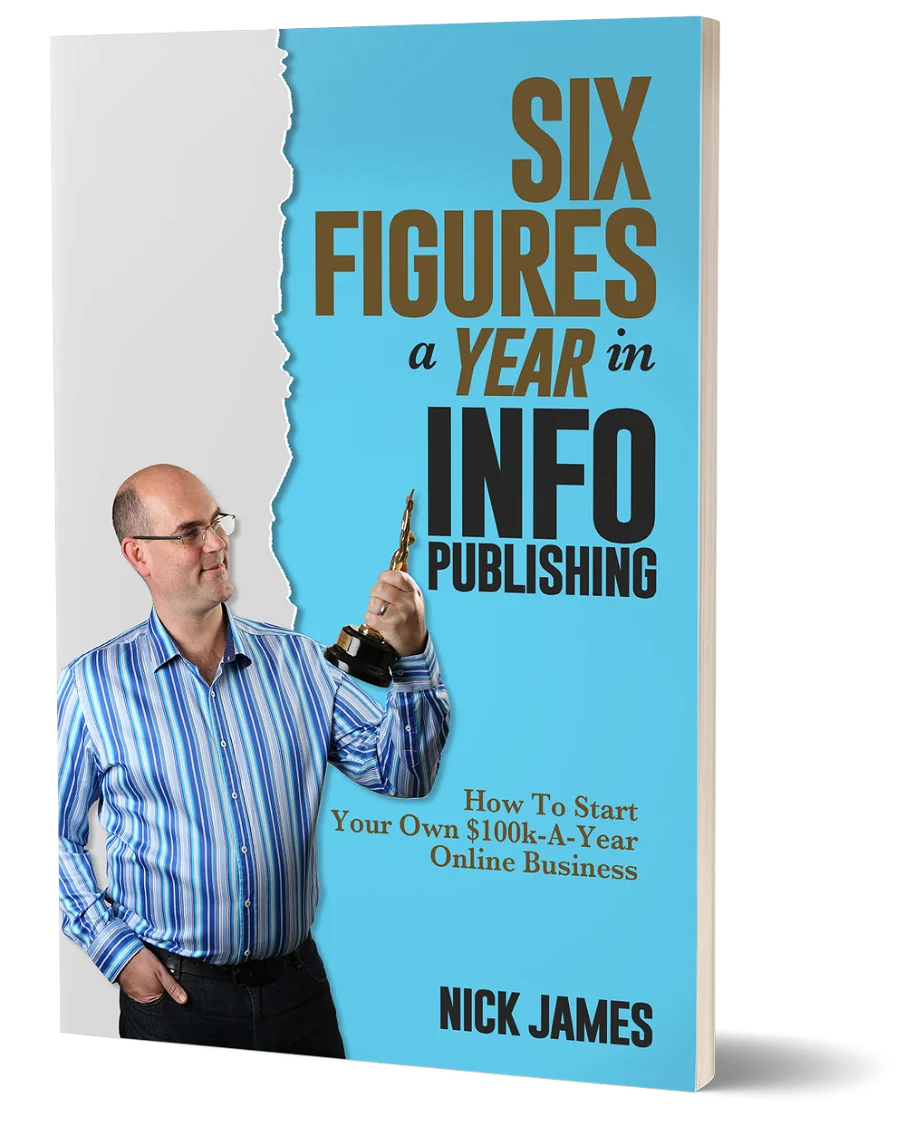
Author offers a FREE copy of this book to his next door neighbor... to prove he's not a drug dealer!
Now claim your FREE COPY.
and follow the step-by-step instructions for making the kind of money (and living the kind of lifestyle) that'll get your neighbors curtains twitching with curiosity!
Enter your details below to discover how to claim your FREE COPY of 'Six Figures A Year In Info Publishing' ...
Privacy Policy : We value your privacy. You can unsubscribe from receiving future emails with 1 click at any time.