The Surprising Subject Line Secret That Gets More Emails Opened
Most people assume a good subject line should explain everything. Say exactly what the email is about, and the reader can decide in half a second whether it is worth opening. That sounds sensible.
It is also, more often than not, wrong.
Open your own inbox and look at what you actually clicked on first this morning. The chances are it was not the message that spelled out its whole contents in the subject line. It was the one that left something unanswered.
That gap between what you know and what you want to know has a name. My husband calls it a curiosity gap, and he has built whole launches around it. Understanding how it works can change how many of your email subject lines actually get opened, not just sent.
Why a Fully Explained Subject Line Gets Ignored
A subject line that tells the whole story closes the loop before the reader has even opened the message. Nothing is left to wonder about, so nothing pulls them forward.
A subject line built around a genuine curiosity gap does the opposite. It hands the reader a small, specific question and makes your email the only place that question gets answered.
My husband has tested this for years, running launch after launch, and the pattern never really changes: the curious version nearly always outperforms the fully explained one, even when both are promoting exactly the same thing underneath.
Specific Beats Vague, Every Time
There is a line between curious and confusing, and it matters more than the gap itself.
Tease too little and nobody knows what you are even hinting at. Tease too much, with no real answer waiting, and your reader feels played rather than curious, which costs you their attention on the next ten emails too.
Picture two versions of the same subject line. One reads A quick update, which teases nothing because there is nothing to resolve. The other reads The one setting we forgot to change, which names a specific, recognisable thing without giving away what it is. The second version pulls harder, because the reader can picture exactly the kind of mistake you mean, even without knowing which one.
A good curiosity gap is not a trick. It is an honest promise that your next sentence has to keep.
The gap that works sits in the middle. Specific enough that the reader can feel the shape of the question. Open enough that they still have to click through for the answer.
How We Use This in Our Own Launch Emails
I run the launches for our Internet Marketing Newsletter, and this is where the idea stops being theory and starts being something I watch happen in real time.
Recruiting starts six to eight weeks before a launch, over Messenger, WhatsApp, email and LinkedIn, and by the time the doors open, every affiliate has swipe emails, banners and a JV page ready to go. There is also a leaderboard with a prize pool, which is where the curiosity gap shows up without anyone planning it that way.
Day one and the closing day are always the busiest. Scarcity does some of that work, but so does the gap itself: subscribers do not yet know what is in the offer, or where their favourite affiliate sits on the leaderboard, and that unanswered question is what gets the email opened rather than filed. I have covered more of how we structure these launches in other articles I have shared recently, if the mechanics interest you beyond this one piece.
Watching that pattern repeat, launch after launch, taught me something I would not have guessed from theory alone: the subject lines that spelled out the whole offer never performed as well as the ones that simply named a question worth answering.
Four Honest Ways to Open a Gap
You do not need a new voice to use this. You need one small habit inside the email subject lines you are already writing.
Name the mistake, hide the reason. Tell the reader a mistake exists and that it is probably costing them something. Save the actual reason for the first line inside the email. A line like The subject line mistake nearly everyone makes works for exactly this reason.
Point at something specific, not a vague promise. A precise detail pulls harder than a general claim ever will. The three words I removed from every subject line is sharper than a vague line about a small wording change.
Ask the question they already have. A genuine question in the subject line does the same job this gap does anywhere else. Are you making this one mistake with your subject lines? does more work than a flat statement ever could.
Name a number, not an outcome. A specific figure sitting just out of view is far harder to ignore than a broad topic sitting in plain sight. A number such as three words or forty seven minutes holds attention in a way that a few small changes never will.
A lot of people tell me the same thing when I ask why they have not tried any of this yet: I just don’t have the time. Testing a handful of subject lines costs you an afternoon, not a rebuild of your whole list.
Close the Gap Before You Ask for Anything
This is the part that separates a genuine curiosity gap from a cheap trick. The gap has to close.
Open a question in your subject line, then answer it fully in the first few sentences of the email. Your reader gave you their attention on the promise that an answer was waiting. Keep that promise every single time, and they will open the next one without a second thought.
Break it once, and the subject lines that used to work start getting ignored along with everything else you send.
If You Want to Take It Further
Getting the subject line right only gets your email opened. What you do with the rest of it, the body copy, the offer, the follow-up sequence, is a separate skill in its own right.
If writing that whole picture still feels like guesswork, Lazy Way To Email Riches is worth a look. It is built around getting email marketing working properly from subject line through to follow-up, rather than treating each piece on its own.
Start smaller if that is easier. Pick one email you send regularly and rewrite just the subject line this week. Name a real question instead of the whole answer, and see what happens to how many people open it before you change anything else.
Best wishes as always,
Kate
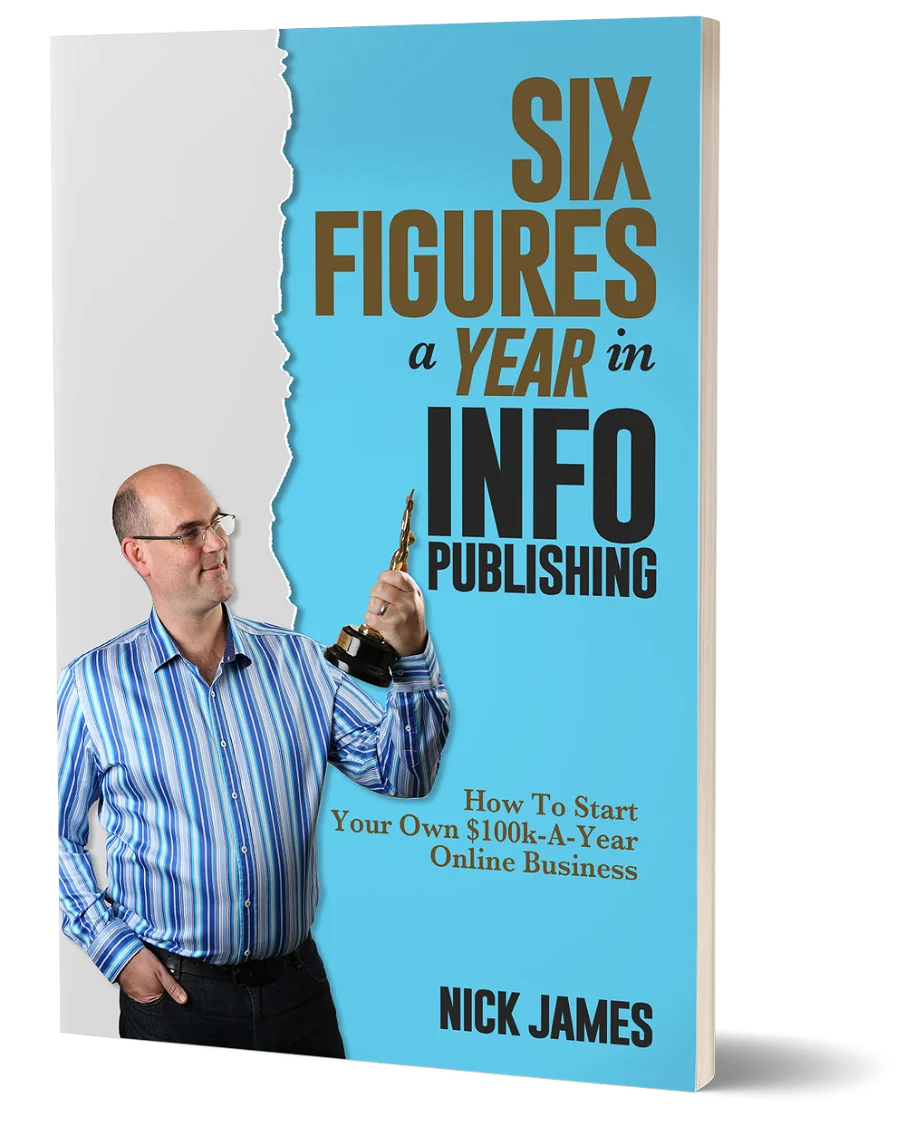
Author offers a FREE copy of this book to his next door neighbor... to prove he's not a drug dealer!
Now claim your FREE COPY.
and follow the step-by-step instructions for making the kind of money (and living the kind of lifestyle) that'll get your neighbors curtains twitching with curiosity!
Enter your details below to discover how to claim your FREE COPY of 'Six Figures A Year In Info Publishing' ...
Privacy Policy : We value your privacy. You can unsubscribe from receiving future emails with 1 click at any time.