
The True Numbers That Reveal Why Strangers Join Your List
You hit publish on a new sign-up page, then you do what everyone does next. You refresh it, just to check whether the subscriber count has moved. It has not. Zero, sitting underneath a join button that currently has nobody standing behind it.
I see this exact moment constantly from the support desk I run. A customer has built something genuinely useful to them, written a decent page for it, and still cannot work out why nobody is signing up.
The answer is rarely the page itself. It is social proof, the plain, specific evidence that other people already said yes before this particular reader did. Without it, your reader has only your word to go on, and a stranger’s word is not worth much yet.
Why A Crowd Convinces Before A Sentence Does
Nobody reads a sign-up page the way they read a letter from a friend. They skim it, half-trusting, looking for a reason not to bother.
A stranger’s brain runs a quick, quiet check before it decides anything worth deciding. If other people already joined and stayed, this is probably safe for me too.
That is not a flaw in how people think. It is sensible caution, and it is the same shortcut I use myself before I buy from somebody I have never heard of.
The same logic shows up well beyond online shopping. A busy restaurant with a queue outside convinces a passer-by faster than any menu in the window could, because a crowd of strangers already chose it tonight. Your sign-up page needs the online version of that queue.
A claim you write about your own list will always be read with a little suspicion, because you wrote it. A number your reader can check for themselves carries none of that problem.
Specific Beats Vague, Every Time
I have written more on this kind of thing in other articles I have shared recently. The same pattern keeps turning up: specific wins, vague loses.
Vague language survives because it is easy to write and nobody can disprove it. A specific number takes more nerve, because it can be checked, and because today’s honest figure might be smaller than you would like it to be.
“Trusted by thousands” could belong to any business alive. It proves nothing, because nobody reading it can check whether it is true.
A real number is a different animal entirely. It cannot belong to anyone else’s business but yours, and that ownership is exactly what makes it persuasive rather than decorative.
I learned this properly running the launches for the newsletter my husband and I publish together. Every year the feedback that comes in unprompted earns its place on a page far more than anything I could write about it myself.
Eighteen People Said So, Not Me
One subscriber, Andrew T., emailed simply to say he had been reading for a few months. He was finding the content “very interesting and useful”. That one line does more work on a page than a paragraph I could write myself ever would.
Alongside Andrew’s note, we have gathered testimonials from eighteen people in total, named individuals who put their own name to their own words. David Perdew has said his own community sees between 20 and 30 percent of readers click through and download. That happens on the day an issue goes out. Matt Garrett has been a subscriber for five years. One long-standing reader asked to stay anonymous rather than have his name attached to it, which, oddly enough, is its own kind of proof.
Compare that to a vague banner reading “our community loves this.” It asks for trust it has not earned. Eighteen named people, each prepared to put their name against their own words, earns it instead.
None of that is a claim I invented to sound impressive. It is eighteen separate people, on the record, saying something works for them, in their own words. That is what specific social proof looks like once you stop writing claims and start collecting them.
The number matters more than it sounds. Eighteen named people is a fact a reader can weigh up. “Loved by our subscribers” is not a fact. It is a sentence, and a stranger has no way of knowing whether it is true.
The Rule That Protects Every Number You Use
None of this works if the number is not real.
A padded figure, once a reader spots it, does more damage than showing no proof at all. Catch one invented number and a visitor quietly assumes every other number on the page is invented too. Picture a list owner who writes “thousands of happy subscribers” when the real figure is forty. The moment one subscriber mentions the true number out loud, every other claim on that page becomes suspect.
This is also why borrowing someone else’s big number never works. A reader can tell, somehow, when a figure belongs to a much larger business than the one actually asking for their email address. The mismatch between the claim and the page around it is its own kind of warning sign.
I think honesty here is not really a moral position. It is simply the only version of this that keeps working once somebody checks.
If your list is small today, say the true number. A modest, honest figure this month becomes a bigger, honest figure next year. Your reader can watch that happen alongside you, which builds its own kind of trust.
Where It Belongs On The Page
Your sign-up page is not the only place this belongs, and it is rarely the most important one.
Put one honest figure near the button itself, in the same glance as the invitation to join. Do not bury it further down the page where nobody scrolls to find it.
It is worth saying plainly: this does not mean cramming every page with numbers until it reads like a dashboard. One honest figure, placed well, carries more weight than five scattered through a page that starts to feel like it is trying too hard to convince you.
Your welcome message is a second chance to use it. Tell a brand new subscriber how many people are already reading alongside them. A lonely inbox starts to feel like a room they just joined rather than an empty corridor.
Your regular emails are a third chance. One genuine reply, mentioned naturally, does more over a year than one big proof section crammed onto a single page ever will.
Start With The Number You Already Have
You do not need thousands of subscribers before any of this starts working for you. You need to be willing to say the real number out loud.
Pick the one sign-up page or welcome message that matters most to your business right now. Add exactly one honest figure to it this week. Not five. One.
Then watch what happens to how many people finish joining. Most people who try this once do not go back to a bare page again.
None of this requires a redesign, new software, or a bigger list than you have today. It requires one true sentence, placed where the reader’s eye already lands, instead of the space being left blank or filled with something vague.
Every list starts at zero, including the newsletter we run, which started that way too. The difference between a page that quietly stalls and one that finally works is often just one true number. It is shown plainly where your reader can see it. That is the whole of social proof worth remembering: not a slogan, a figure your reader can check for themselves.
Best wishes for now,
Kate
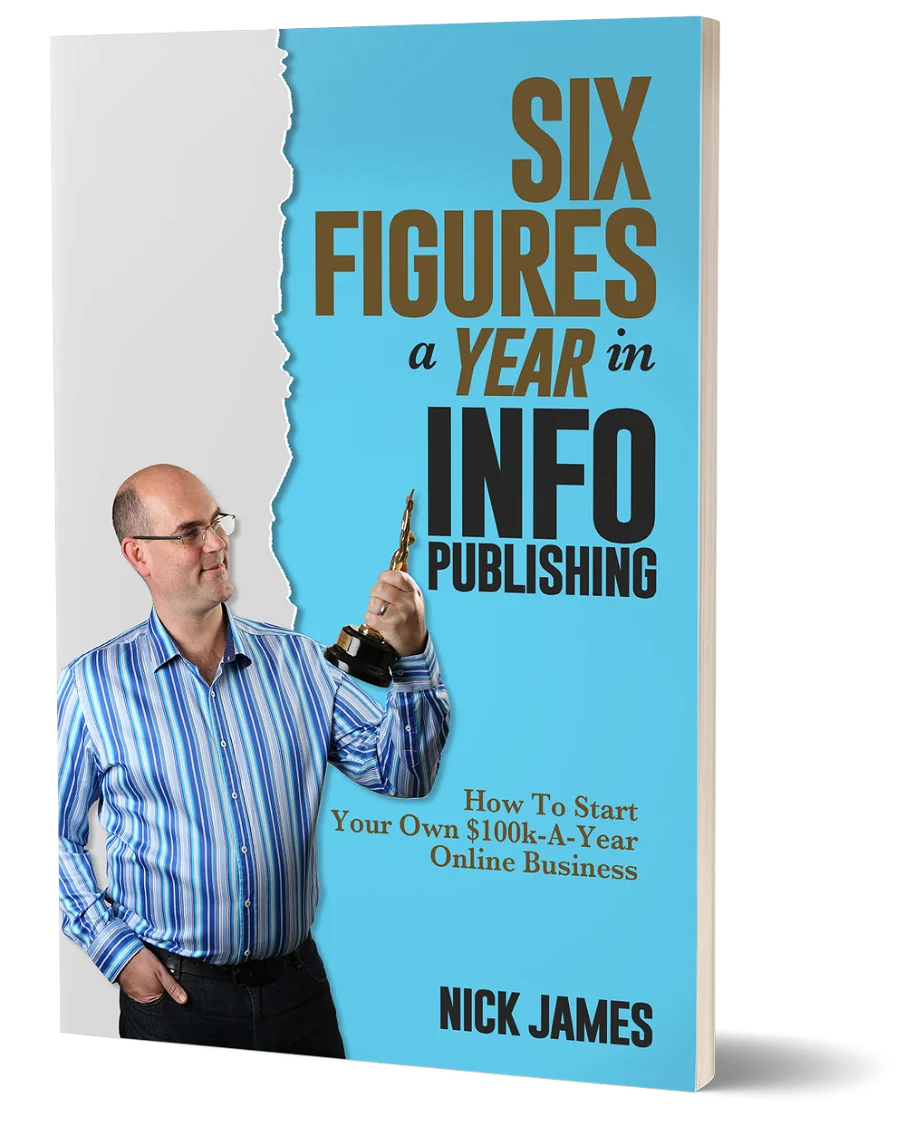
Author offers a FREE copy of this book to his next door neighbor... to prove he's not a drug dealer!
Now claim your FREE COPY.
and follow the step-by-step instructions for making the kind of money (and living the kind of lifestyle) that'll get your neighbors curtains twitching with curiosity!
Enter your details below to discover how to claim your FREE COPY of 'Six Figures A Year In Info Publishing' ...
Privacy Policy : We value your privacy. You can unsubscribe from receiving future emails with 1 click at any time.