
Discover The Smart Pattern Hiding In Your Own Data
Two customers once told us two very different stories that turned out to be exactly the same story.
One swore he had never received an email about a program update. He had. The other had his monthly subscription cancelled for non-payment, because he never saw the notice that would have stopped it. Both emails had quietly filed themselves away before either man had read a word of them.
I sorted both cases out myself. The emails were not lost. They were exactly where the filter had put them, sitting there the whole time, filed before anyone had the chance to read them.
This was based on two specific individual cases I resolved directly, not a claim about how common this is across a wider customer base. It stuck with me for a reason that had nothing to do with email filters. It made me think about your own data, and how much of it sits unread in places you have already paid to collect it.
The Answer Is Usually Already There
I think about those two emails every time someone tells me they have no idea what to write about next.
Because the honest answer is rarely that the information does not exist. It is that it has already been filed away, in a sent folder nobody has reopened properly in months.
Every newsletter you have ever sent carries evidence. Which subject lines got opened. Which links got clicked. Which emails earned a reply, and which ones sat there, unread, exactly like the two that caused all that bother.
Most of us never go back and look. We write the next email, and the next, guided by instinct rather than evidence we already paid to collect.
The honest answer is rarely that the information does not exist. It is that it has already been filed away.
That is the gap this article is about closing.
Ask Better Questions Of Your Own Numbers
If you have ever asked an AI tool what to post next, you have probably had a perfectly reasonable answer back. The trouble is, it has no idea what has worked for you specifically.
Your own data fixes that gap, provided you feed it to something that can look for patterns properly.
Export the last few months of your own email performance. Subject lines, send dates, open rates, click rates, and anything that generated a reply or a reply-free silence. Then ask better questions than the obvious one.
Not simply which email performed best. Ask which topics beat your average more than once. Ask which subject lines earned a click rather than just an open.
Ask what your three quietest emails had in common. I would want to know that last one most of all.
Say your numbers show that every email mentioning a specific how-to step outperforms the rest, while general motivational notes sit near the bottom. That single pattern, found in your own data, tells you more about what to write next week than any outside suggestion could. It came from people who already said yes to you once.
I have written more about this kind of close, unglamorous attention to detail in other articles I have shared recently. It is a theme that keeps turning up, because it is rarely the flashy ideas that move a business forward.
Find The Gap You Have Been Under-Writing
This is where the exercise earns its keep.
You might discover that every email mentioning pricing, or refunds, or exactly what a product includes, quietly beats your average. Yet you have written about it only once in six months.
That is not a curiosity. That is your next three emails, sitting there waiting to be written.
It works the other way too. If a topic you keep returning to never performs, that is useful information as well, even if it is not the answer your ego was hoping for.
I keep a running note of what each email is really about, not just the subject line. A pattern across six months is far easier to spot on a page than it is to recall from memory.
You do not need anything clever to do the same. A simple spreadsheet, updated once a month, will show you more about your own audience than a year of guessing ever will.
Test Before You Press Send
Once you know your own patterns, you can use them before you publish, not only after.
Before sending something new, compare the draft plainly against what has worked for you in the past. What does it share with your better performing emails? What does it share with your quietest ones?
It will not predict the future with certainty. It will stop you walking in blind, which is most of the work worth doing.
Write, measure, compare, write again. Send it anyway, and record what happens. Do that enough times and you build a loop worth having, each round a little sharper than the last.
None of this needs to be complicated. A short note after each send, two lines on what worked and what did not, is enough to start. It turns your own data into something you use, rather than something that just sits there looking tidy.
Where This Leads If You Keep Going
None of this is about chasing clever hooks. It is closer to a habit from recruitment: writing down names, birthdays, and small details that made a client feel properly known. Not filed away under a number.
Your subscriber data is doing the same job here, if you are prepared to read it properly.
If you want somewhere specific to take this, Lazy Way To Email Riches is worth a proper look. It is something Nick and I built ourselves, specifically for people who want to take their list further than simply reading their numbers more carefully. If you want to go further than what I have room for here, this is where I would start.
Your subscribers have already told you what they want. The proof is sitting in a folder you probably have not opened properly in a while. Go and have a proper look at your own data before you write anything else.
Best wishes for now,
Kate
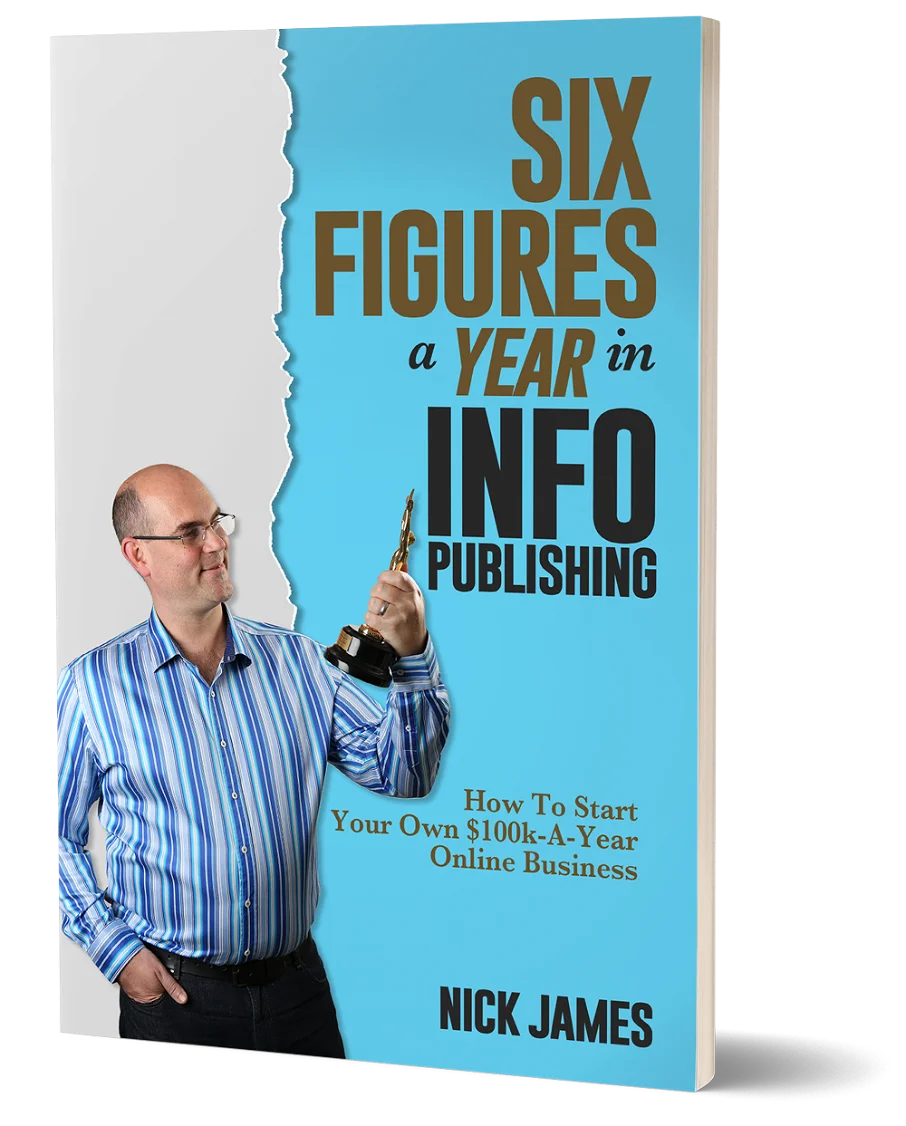
Author offers a FREE copy of this book to his next door neighbor... to prove he's not a drug dealer!
Now claim your FREE COPY.
and follow the step-by-step instructions for making the kind of money (and living the kind of lifestyle) that'll get your neighbors curtains twitching with curiosity!
Enter your details below to discover how to claim your FREE COPY of 'Six Figures A Year In Info Publishing' ...
Privacy Policy : We value your privacy. You can unsubscribe from receiving future emails with 1 click at any time.


