
How to Write Money-Making Emails Using One Clear Secret
‘I just don’t have the time.’ It’s the line I hear most often when the subject of writing your own money-making emails comes up, and I understand it completely. Between the day job, the family, and the ten other things pulling at your evening, sitting down to write to your list can feel like the task that never quite gets its turn.
Here’s what I’ve noticed after years of reading customer support tickets and subscriber replies. The people who struggle most with their money-making emails aren’t struggling because they lack time. They’re struggling because they think an email has to be clever, polished, and carefully worded before it’s worth sending. That belief is what’s costing them the time, because it turns a five-minute task into an afternoon of second-guessing.
Why Polish Isn’t the Point
A memo gets skimmed. A letter gets read.
That’s the whole difference between an email that gets deleted and one that gets opened properly. Your subscriber isn’t marking your writing. They’re deciding, in about two seconds, whether the person on the other end sounds like someone worth their attention.
If you’ve ever rewritten a sentence four times because it didn’t sound formal enough, that instinct is working against you. Write it the way you’d explain it to one person over a cup of tea, not the way you’d present it to a room. Short sentences. The odd one-liner on its own. A sentence that ends on a word your old English teacher wouldn’t approve of, if that’s how it naturally comes out.
A memo gets skimmed. A letter gets read.
Picture two versions of the same opening line. One reads: We hope this update finds you well and wanted to share some exciting news about our latest offering. The other reads: Quick one for you today, since I know your inbox is already full. The second isn’t cleverer. It’s just one person talking to another, and that instinct is worth more than any trick you could learn afterwards.
I think the reason this matters so much for our audience in particular is that most of you aren’t writing to strangers. You’re writing to people who came looking for a way out of the 9-to-5, or a bit of extra income, or something to build for their kids. They don’t want a brochure. They want to know somebody on the other end understands what they’re going through.
One Reader, One Problem
The second habit worth building is being specific rather than general, and it’s the one I see people get wrong most often.
‘Tips for growing your business’ tells a reader nothing they haven’t seen a hundred times. ‘The one thing costing you three sales a week’ tells them exactly what’s waiting inside, and why it matters to them specifically.
Before you write your next subject line, try finishing this sentence properly: this email is for the person struggling with one named thing. Not your business in general. Not ‘value’. One thing.
This is where I’d gently push back on something I hear a lot, which is customers blaming a product for not working when really they never rebranded it, never wrote to their own audience about it, and never made it sound like it came from a real person rather than a template. Specificity is the bit nobody can do for you. It’s also the bit that costs nothing but a few extra minutes of thought.
Compare a subject line like ‘Grow Your List Faster’ to one like ‘The Three Sentences Costing You Subscribers.’ The first could belong to any business on any list. The second only makes sense to someone who already knows they have that problem, which means it was written for one reader rather than for everyone at once.
I’ve written before about the small habits that separate a subscriber who trusts you from one who quietly unsubscribes, and other articles I have shared recently go into a few of them properly. This one is the habit that tends to matter most, because it shows up in every single email you send, not just the occasional one.
Give Something Before You Ask for Anything
Every email you send should do one job well before it tries to do anything else. It should answer the question your reader is quietly asking, which is simply: what’s in this for me?
That doesn’t mean attaching a gift to every message. It means giving your reader one point they can use, even if they never buy a thing from you. A short tip. A quick answer. Something specific enough that it was clearly written for them and not copied from somewhere else.
Think of it like handing someone a single useful tool rather than the whole toolbox at once. They can use it immediately, and they remember who gave it to them the next time they open an email from you.
Readers who feel helped open your next email. Readers who feel sold to don’t. That’s not a clever marketing line, it’s just what I’ve watched happen, over and over, in the years I’ve managed our own subscriber base.
Pick one goal for the email before you write a word. Not three goals fighting each other. One. If the goal is getting someone to read one useful idea, let that be enough. The click, the reply, the sale, those follow when the email has earned them, not before.
The Two-Minute Check Before You Hit Send
Before your next email goes out, run it past three quick questions. Is there one clear goal, not several competing with each other? Would the person you’re picturing enjoy reading this? Does it give something useful even to the reader who never clicks a single link?
If you can answer yes to all three, send it. If you can’t, you already know which of the habits above needs another look.
None of this requires being a naturally gifted writer. It requires sitting down, picking one person and one problem, and writing to them the way you’d talk if they were sitting across the table. The rest tends to sort itself out.
Where to Go From Here
These three habits will get your money-making emails opened more often, and read properly once they are. If you want a fuller system behind them, built specifically around growing and keeping a subscriber list rather than just writing to one you already have, it’s worth having a look at Lazy Way To Email Riches. It covers building a list from nothing, keeping it out of the spam folder, and the practical side of making money from it once it exists, which is the part a single article never has room for.
Between the three habits above, the pattern is the same: one reader, one problem, one honest sentence, told the way you’d tell it to a friend across a table rather than a room full of strangers. That’s the whole shift, and it costs nothing but a different starting question before you type.
Start with your very next email. Pick one person, one problem, and one honest sentence to open with. You might be surprised how much easier the rest becomes.
Best wishes for now,
Kate
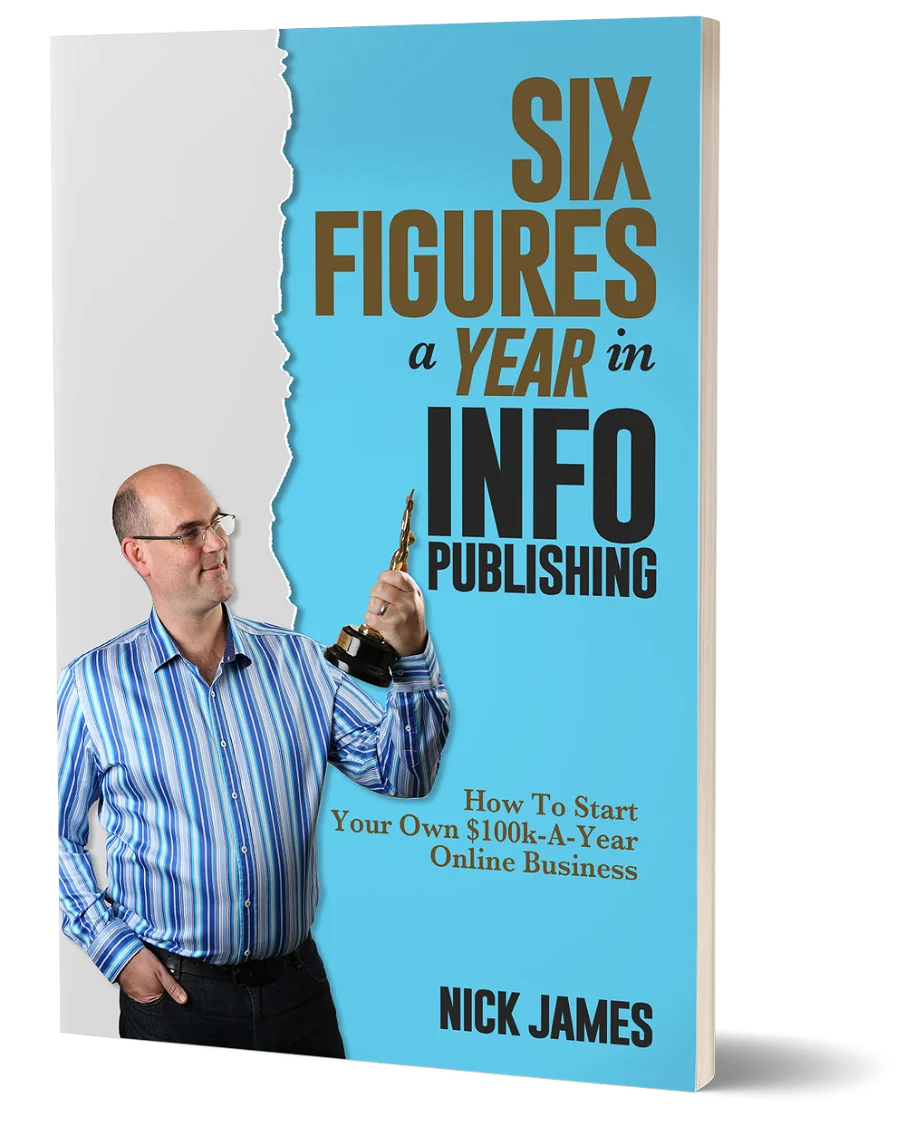
Author offers a FREE copy of this book to his next door neighbor... to prove he's not a drug dealer!
Now claim your FREE COPY.
and follow the step-by-step instructions for making the kind of money (and living the kind of lifestyle) that'll get your neighbors curtains twitching with curiosity!
Enter your details below to discover how to claim your FREE COPY of 'Six Figures A Year In Info Publishing' ...
Privacy Policy : We value your privacy. You can unsubscribe from receiving future emails with 1 click at any time.