
4 Fresh Ways to Help AI Discover Your Site
I keep an eye on where our traffic comes from, not just how much of it there is. Over the last few months, a noticeable slice of it has started arriving from somewhere that did not exist a few years ago: someone asked an AI tool a question, and it pointed them at a page.
That matters more than it sounds. When a reader types a question into ChatGPT or Google’s AI mode instead of a normal search box, something has to decide which pages are worth mentioning back to them. Increasingly, the answer is a particular kind of page.
Ahrefs looked at over 26,000 source pages tied to buyer-style AI prompts and found that nearly 44 percent of them were “best X” style lists, more than any other format. Across several AI tools, a separate analysis put listicles at 63 percent of citations by volume.
If you want better AI search visibility for your own site, that is useful to know. It is also, frankly, good news for anyone who already has a list of things to recommend and simply has not written it down properly yet.
Why AI Keeps Reaching For The List
Think about how you ask AI tools questions now. Which email platform suits a tiny business. Which website builder is easiest for a beginner. What someone starting out with licensed products should do with one.
An AI tool answering a question like this is not browsing for inspiration. It is trying to assemble the shortest accurate answer it can, and a tidy list of real comparisons is simply easier to lift from than a page of flowing opinion.
A well built list answers that kind of question in one place: several real options, honest comparisons, a clear recommendation. That is exactly what an AI tool needs to hand back to someone in a useful answer.
A single opinion buried halfway through a long article does not give it much to work with. A clear, organised comparison does.
None of this means AI visibility should become your whole strategy. It means a format most of us stopped bothering with years ago, because it felt a bit dated, has quietly become one of the most useful things you can publish.
Way One: Make The List Properly Useful
The old version of this format was lazy. Ten items, a product dropped in at number one, a paragraph of padding under each.
That will not earn you AI search visibility, and it would not have earned you much reader trust either. A list worth citing compares the options: who each one suits, what it costs them in time or effort, and where it falls short.
Picture two email tools compared honestly: one nearly free with a tight contact cap, suited to someone just starting out, the other pricier but built to scale once a list grows past a few thousand names. Naming the trade-off that plainly is what separates a usable comparison from a sales pitch dressed up as advice.
If you are writing for people who have already tried a few things that did not quite work, honesty about the drawbacks matters more than enthusiasm about the winner.
Way Two: Answer The Exact Question Someone Is Already Asking
Do not start with “ten tips for list building.” Start with the actual sentence someone types when they are stuck.
Something closer to: which tool should a complete beginner use to build their first email list without a technical headache.
Instead of ‘tools for solopreneurs,’ that might become ‘what should a solopreneur with no budget use to send their first ten emails.’ The more specific the question, the easier the list is to write, and the easier it is for an AI tool to match it to somebody asking almost exactly that.
Search suggestions, forum threads and the comments under a competitor’s post or video are a good place to find the real wording. A list built around a specific, real question gets found more easily than one built around a broad topic, because that is closer to what somebody asked.
I have covered the mechanics of building that first list properly in other articles I have shared recently, so I will not repeat all of it here. The point worth adding is simply that the question shapes the list, not the other way round.
Way Three: Show Your Working
This is the part most people skip, and it is the part that makes a list worth citing rather than ignoring.
Explain who each option on your list is right for. Say plainly who should probably choose something else. Keep the information current rather than leaving a comparison sitting unchanged for two years while prices and features move on underneath it.
Say so plainly when a cheaper option skips a feature the pricier one includes, and say which readers can safely ignore that gap. A list that only ever says ‘this one is best’ for everything on it is not comparing anything at all.
A list that admits a product has a limitation reads as more trustworthy than one that praises everything equally. Readers notice that. AI tools, built to summarise reliable information, seem to notice it too.
Way Four: Give It Something Worth Quoting
Somewhere in your list, include one short, clear sentence that sums up the recommendation plainly.
Not a clever line. A useful one. “This one suits someone with no list yet and a tight budget” is more quotable than three paragraphs circling the same point.
Write that sentence the way you would say it to someone face to face, not the way a brochure would phrase it. Plain and specific beats clever every time.
AI tools pull short, specific statements far more easily than they extract meaning from a long, winding paragraph. Writing one clear sentence per item costs you almost nothing and makes the whole piece easier to lift from.
Putting This To Work On Your Own Site
Pick one “best X” question your own audience is likely asking right now. People new to licensing products, people trying to build their first list, people choosing between two ways to get started.
Write one properly comparative list answering it. Include real options, honest trade-offs and one clear recommendation sentence for each.
If the question is about licensing, for instance, walk through two or three different products side by side: what each one includes, who it suits, and the one thing you would tell a friend before they bought it.
Then do it again next month, for a different question.
You are not writing these for AI tools instead of your readers. You are writing them properly for your readers, and AI search visibility is simply what tends to follow when the work underneath is really useful.
Think of the list as a service to the reader first, and treat any AI attention it earns as a reasonable side effect rather than the goal.
That is the part worth remembering before the format changes name again in a year or two: the fundamentals barely moved. People still want a short, honest answer to a specific question. Give them one, and it turns out AI wants to hand it to them too.
Best wishes for now,
Kate
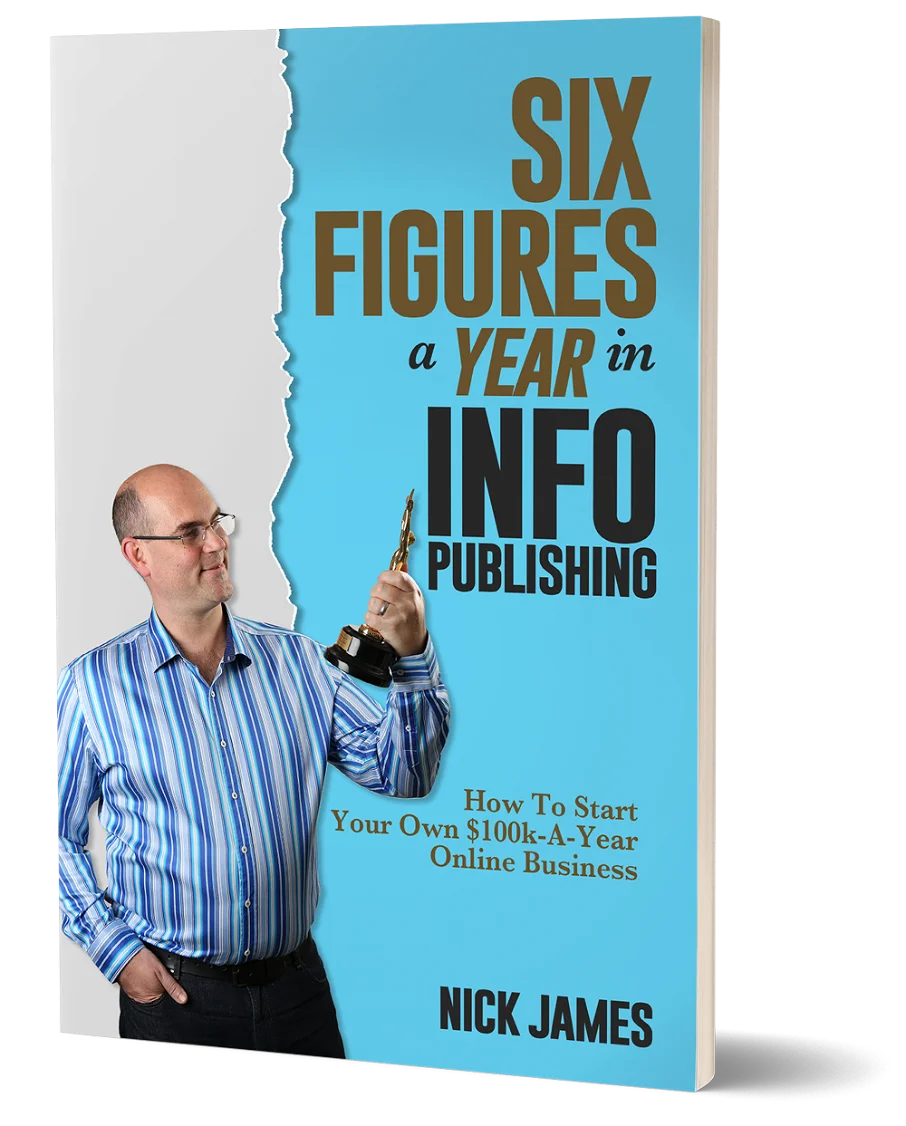
Author offers a FREE copy of this book to his next door neighbor... to prove he's not a drug dealer!
Now claim your FREE COPY.
and follow the step-by-step instructions for making the kind of money (and living the kind of lifestyle) that'll get your neighbors curtains twitching with curiosity!
Enter your details below to discover how to claim your FREE COPY of 'Six Figures A Year In Info Publishing' ...
Privacy Policy : We value your privacy. You can unsubscribe from receiving future emails with 1 click at any time.


