
How to Spark Smart Audience Participation With One Surprising Trick
I read every reply that comes into our support inbox, and I have noticed something rather odd. The emails asking a plain, sensible question rarely get much of a response from readers who see similar ones shared later. The ones with a small mistake in them, a wrong date, a broken link, a claim somebody quietly disagrees with, those are the ones people reply to, and often at length.
It took me a while to see the pattern for what it was, rather than treat it as an annoyance to tidy up quickly. If you want more audience participation from the list you are building, you do not need better answers. You need to leave a little more room for someone to correct you.
That single shift changes how your emails, posts and articles perform, and it costs nothing at all to put into practice.
You have probably felt the other side of this too, opening an email that answers everything so completely that there is nothing left to say back. You read it, you agree, and you move on without a word, which is exactly what a tidy email trains you to do.
Why Being Slightly Wrong Works Better Than Being Perfectly Right
There is a well known pattern on forums like Reddit. Someone asks a technical question and gets nothing but silence for hours. Eventually they post a confident, completely wrong answer under a second account, and within minutes the thread fills with corrections, explanations and links.
You have probably done this yourself without noticing, scrolled past a calm complete answer and stopped to correct someone who got a small detail wrong.
The lesson is not to deliberately mislead the people who trust you, which would be a poor way to treat a subscriber. The lesson is about what gets a response. Ask for help, and most people scroll past. State something with confidence they can politely disagree with, and suddenly everyone becomes a volunteer.
People rarely reply to content that gives them nothing to do. They reply to content that leaves a small gap for them to fill.
The Quiet Cost of Always Being Helpful
Most of us were taught that useful content means complete content. Answer the question fully. Cover every angle. Leave nothing for the reader to add.
That instinct is not wrong, but it has a cost. A perfectly finished piece of writing is easy to nod along to, and just as easy to close the tab on. There is nothing left to argue with, agree with loudly, or add a missing point to.
Picture two versions of the same email. One lays out five polished tips and signs off. The other lays out four, states a fifth as a personal opinion you might disagree with, and asks which one you would rank first. The second gets replies. The first gets opened, nodded at, and archived.
Readers who feel there is room to contribute stay longer, reply more often, and remember you afterwards. I have watched this happen in our own inbox for years, quietly, long before I had a proper name for it.
What This Looks Like in an Email or a Post
You do not need a trick, and you certainly do not need to be wrong on purpose. You need to build in one small, honest gap.
Ask readers to rank something instead of simply recommending it. Share an opinion rather than a balanced summary, and invite them to disagree. State five common mistakes and let the comments add the sixth, as they usually will. Ask a direct question at the end of an email instead of just signing off.
People rarely reply to content that gives them nothing to do.
None of this is complicated. It is a change in what you leave out, not what you add in. I have touched on some of this thinking before, in other articles I have shared recently, but it is worth setting out properly on its own.
What Your Own Replies Are Telling You
Look back at your own sent folder and you will probably see the same pattern. A tidy, complete email gets read and filed away. An email that asks you something, or states an opinion plainly enough that you want to push back, gets a reply within the hour, sometimes a long one.
Part of my work is going through our subscriber inbox, correcting details and keeping our database in decent order, so I see this pattern from the other side too. It holds up over time, whichever side of the inbox you are looking from.
That reply is not engagement for its own sake. It is the beginning of a relationship with a subscriber who now feels heard, which is worth far more to you than one more perfectly polished paragraph.
Building Real Audience Participation Into What You Send
This is not a one-off trick you use in a single email and then forget. Treat it as a habit and it changes how your list behaves over time.
Before you send anything, whether it is a newsletter, a blog post or a short social update, ask yourself one question: where is the gap in this for someone to step into? If the answer is nowhere, the piece is probably too tidy.
Try it with your next three sends. State an opinion instead of a summary in one, ask a ranking question in another, and leave a mistake for someone to catch in the third if you are feeling bold. Watch which one brings the most replies back to you.
Genuine audience participation compounds. A subscriber who replies once is far more likely to reply again, open your next email first, and eventually buy from you, because they already feel like part of the conversation rather than someone being talked at.
Turning Participation Into Something Steadier
Sparking a reply here and there is a good habit. It is not, on its own, a business. The value only really compounds once you have somewhere consistent to put that attention: a list that keeps growing, a routine that keeps bringing people back, and something worth offering once they are ready for it.
Getting a reply is the easy part once you know the mechanism. Turning replies into steady, repeatable income is a different skill, and it is the one worth building properly rather than picking up by accident.
You do not need dozens of replies a day to make this worthwhile. A handful of subscribers who reply, open first and eventually buy is worth more than a much larger list that never talks back to you.
Nick James put together Make Cash Like Clockwork for exactly that stage, once you have readers who are paying attention and you want a proper structure for turning that attention into regular income, rather than relying on one good email a month to carry the whole thing. If that sounds like where you are, it is worth a look.
Best wishes for now,
Kate
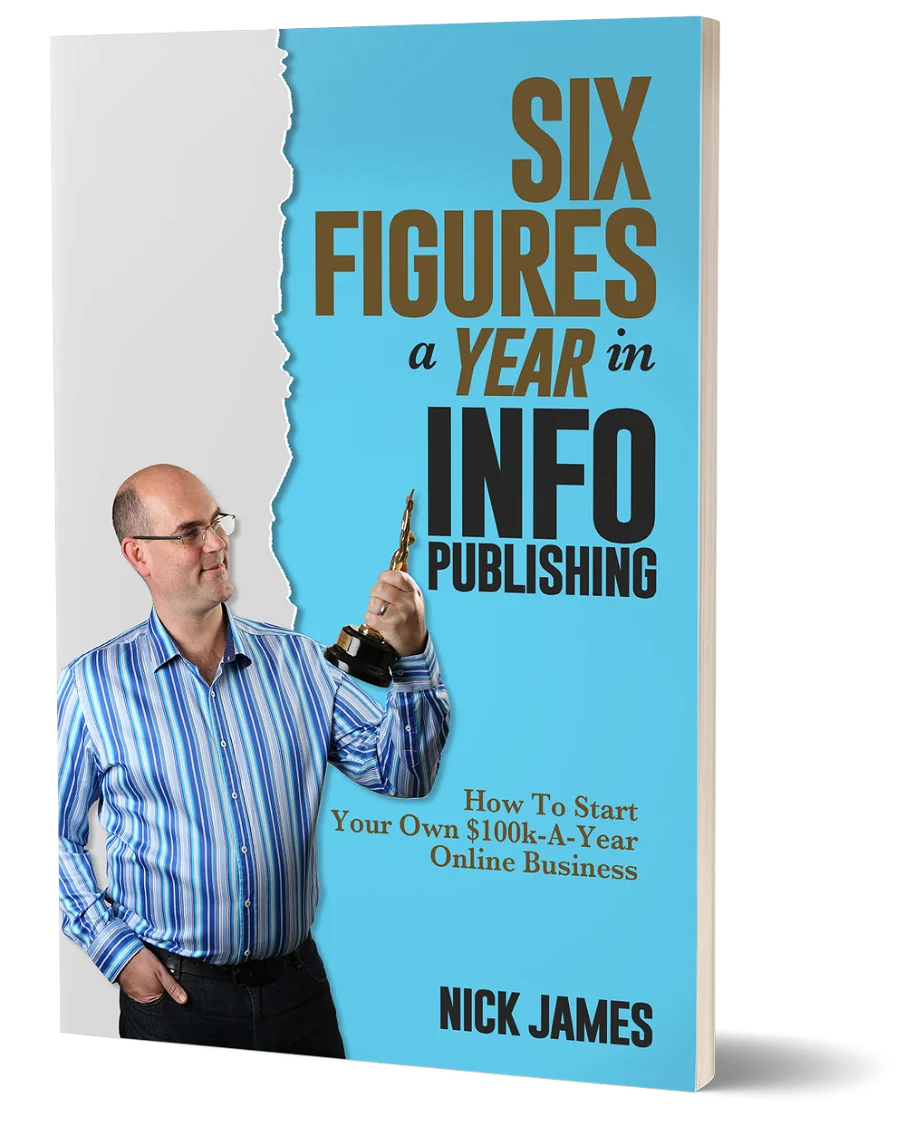
Author offers a FREE copy of this book to his next door neighbor... to prove he's not a drug dealer!
Now claim your FREE COPY.
and follow the step-by-step instructions for making the kind of money (and living the kind of lifestyle) that'll get your neighbors curtains twitching with curiosity!
Enter your details below to discover how to claim your FREE COPY of 'Six Figures A Year In Info Publishing' ...
Privacy Policy : We value your privacy. You can unsubscribe from receiving future emails with 1 click at any time.