How Smart Marketers Are Mastering AI Before The Free Ride Ends
Everyone assumes AI will stay exactly as it is now: unlimited, cheap, always on tap. Ask most people running an online business and they will tell you, without really thinking about it, that AI is basically free forever. That assumption is already starting to look shaky. It has held for years, largely because AI access has been cheap enough to ignore. Cloud storage got cheaper. Software subscriptions stayed flat while adding features. AI has followed the same pattern so far, which is exactly why so few people have stopped to question whether it will continue.
I hear from people who say I just don’t have the time to sit and think about whether a task is worth handing to AI. They just fire off another prompt instead, because it costs almost nothing and takes seconds. That habit made complete sense while AI felt limitless. It may not make sense for much longer.
The newest AI models need enormous computing power to run. Several of the companies behind them are already testing ways to charge separately for their most advanced tools, or to cap how much you can use before you pay more. Some industry leaders have talked about intelligence being priced a bit like electricity: you pay for what you use. That is the beginning of what it means to manage AI costs deliberately.
If that happens, managing AI costs will need to become part of how most solo marketers use AI today.
The Assumption Everyone Is Making
When something feels unlimited, you stop asking whether it is worth doing. You just do it. Brainstorm ten headlines instead of three. Rewrite an email five times instead of once. Ask AI to generate an image you were never going to use.
None of that is wrong, exactly. It just treats AI as a tap you leave running rather than something you point deliberately at what matters.
AI is not a tap you leave running. It is a tool you point at something worth the cost.
That is the shift worth making now, while it still costs you nothing to make it.
What Happens When The Bill Arrives
I do the invoicing across both sides of our business, so I notice costs long before most people would. I have watched enough of these small charges creep into other software bills to know they rarely announce themselves. Small charges that arrive constantly and unexamined have a way of adding up quietly. AI use is heading in exactly that direction for a lot of businesses.
If usage becomes metered rather than flat, every prompt starts to carry a small decision behind it. Is this task worth the cost, or am I just filling time?
That question sounds uncomfortable at first. It is useful, though. It forces you to separate the AI use that truly moves your business forward from the AI use that is just easy to reach for.
Picture a marketer who currently sends fifteen prompts a day without a second thought: three for headline ideas, four for social captions, the rest for odds and ends that could easily have been typed by hand. Under a flat subscription, none of that costs anything extra. Under metered pricing, even a modest per-prompt charge turns that daily habit into a real number by the end of the month. It is not a huge number on any single day. It adds up the way small subscriptions always do, quietly, until someone finally checks the total.
Treat Every Prompt Like A Business Decision
You do not need to wait for pricing to change before you start thinking this way. The habit is worth building now, and it is not complicated.
Before you ask AI to do something, ask yourself one plain question: what happens to my business if this particular task gets done well?
Writing sales copy that has to convert is worth the time and the cost. So is speeding up research you would otherwise put off for a week. Automating a repetitive task you do every single day earns its keep quickly.
Generating a fourth version of an image you already had is not in the same category. Neither is asking AI to write something you could have written in two sentences yourself.
I have written before, in other articles I have shared recently, about how much time gets wasted on tasks that feel productive but change nothing. AI makes it easier than ever to feel busy without earning anything.
The Three Places AI Earns Its Keep
Not every use of AI deserves the same weight, and it helps to know roughly where the return really sits.
First, anything customer facing: the copy, a subject line, an email sequence someone will open. Get that wrong and it costs you sales, so it is worth the input and the cost of getting it right. A subject line that gets opened instead of ignored is worth several careful drafts from AI, because the difference between people reading your email and people deleting it is not a rounding error.
Second, research that would otherwise eat a whole afternoon. If AI saves you three hours of digging, that is a real return, not a novelty. Say you are researching a new supplier, a new platform, or a new angle for an upcoming newsletter. Doing that research by hand might mean an evening lost to browser tabs and half-finished notes. Handing the groundwork to AI, then checking and refining what it gives you, can turn that evening back into free time, which is exactly the kind of trade worth paying for.
Third, anything repetitive you do every week regardless of how you feel about it that day. Automating that is not indulgent. It is sensible. Think of the weekly report you copy and reformat by hand, or the follow-up email you send in exactly the same words each time. Multiply that five minutes by every week of the year and it stops looking like a small saving.
Everything else is worth doing more sparingly, with a bit more thought behind it than a habit.
What This Looks Like On An Ordinary Tuesday
In practice, this is not about using AI less overall. It is about noticing where you are using it out of habit rather than judgement.
Say you sit down at nine on a Tuesday morning with six things on your list. Two of them will shape whether a customer buys or walks away. The other four are busywork dressed up as productivity. The habit worth building is spotting the difference before you open the tool, not after you have already spent twenty minutes on the wrong one.
Before you open the tool tomorrow, decide what the task really is and whether the outcome matters. If it does, use AI properly and generously. If it does not, that is your answer too.
Marketers who treat AI as a resource to manage, not an unlimited toy, will not be the ones who used it the most. They will be the ones who used it where it paid them back.
Nobody knows exactly how AI pricing will move over the next few years. Competition between the big providers will probably keep costs under some pressure even as the tools get more capable. But the habit of asking whether a task deserves the cost, rather than reaching for AI because it is there, is one worth building regardless of what happens to the price. That habit is what managing AI costs looks like day to day.
That habit will still be useful long after this particular pricing debate is forgotten.
Best wishes for now,
Kate
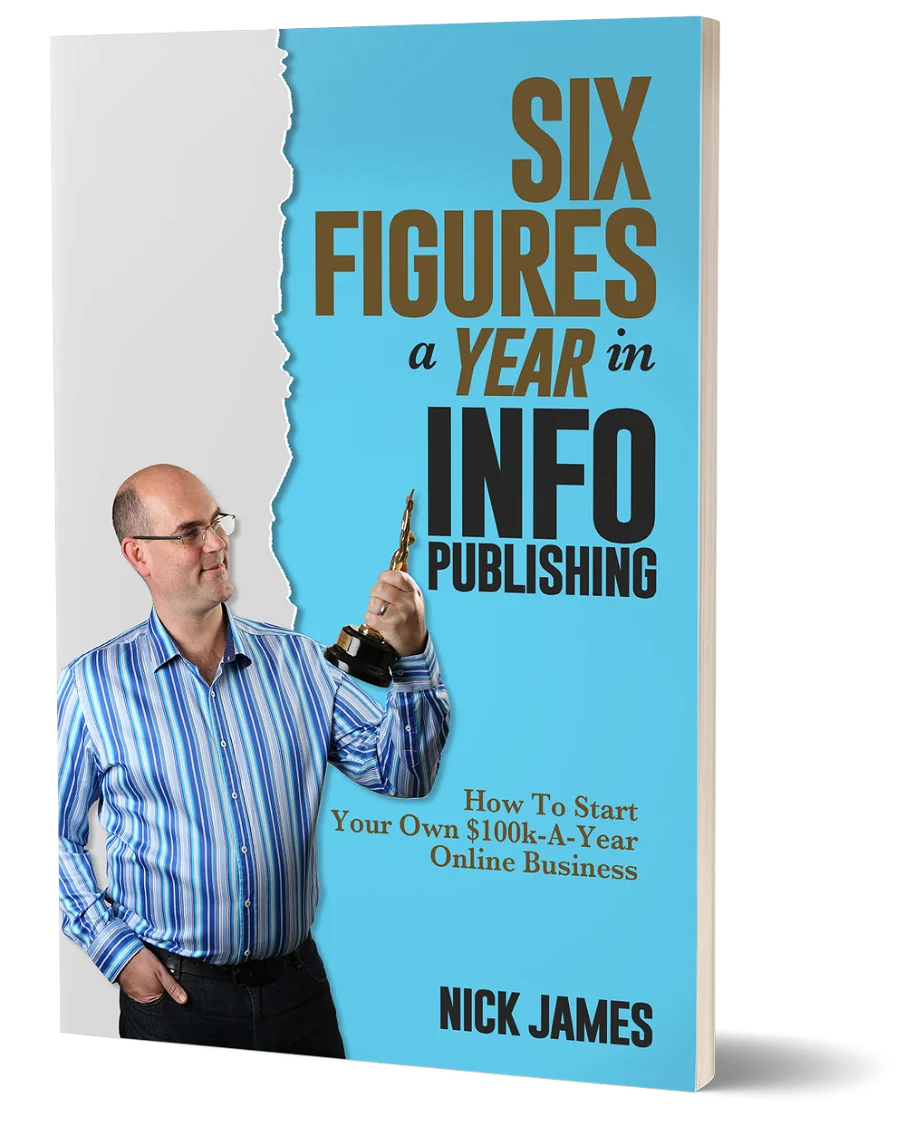
Author offers a FREE copy of this book to his next door neighbor... to prove he's not a drug dealer!
Now claim your FREE COPY.
and follow the step-by-step instructions for making the kind of money (and living the kind of lifestyle) that'll get your neighbors curtains twitching with curiosity!
Enter your details below to discover how to claim your FREE COPY of 'Six Figures A Year In Info Publishing' ...
Privacy Policy : We value your privacy. You can unsubscribe from receiving future emails with 1 click at any time.