How to Find the Hidden Assets Wasting Away in Your Business
I was going through the folder of subscriber replies to the newsletter a few weeks ago, looking for something worth writing about, and getting nowhere. Every fresh idea felt thin, or half formed, or like something I had already said somewhere else. Sitting there scrolling forward through nothing much, I thought what I suspect a lot of you think most weeks. I just don’t have the time to build something new again, not properly.
Then I stopped scrolling forward and started scrolling back.
The folder was not empty. It was full. Years of replies. Short notes from subscribers, the odd complaint, the odd thank you. None of it had ever been used for anything beyond the moment it landed. It had been read once, filed, and left there.
These are hidden assets, and most businesses are sitting on more of them than they realise. Somewhere in yours right now there is material you have already paid for, in time if nothing else, doing absolutely nothing. You do not need a new idea. You need to look properly at what you already have.
The Message I Nearly Filed Away
A few years ago a subscriber called Andrew T. sent a short note. It was the sort of thing that sits in most inboxes without ever being read twice. It is worth thinking about your own inbox the same way while I tell you about it.
He wrote to say he had been subscribed to the newsletter for a few months. He wanted to say the content was, in his own words, “very interesting and useful,” one subscriber’s testimonial rather than a survey of everyone who reads it.
I said thank you and moved on. It was one subscriber’s comment, not a survey of everyone who reads the newsletter. I never intended to do anything with it beyond feeling pleased for the afternoon.
That is worth restating for you, doing what you do this week. A single genuine reply from someone who reads your emails is not just a nice moment. It is proof, in the reader’s own words, of something you cannot write as convincingly yourself, however good your copy is.
One line. Sitting there for years doing nothing, when it could have been doing quite a lot.
Three Places the Hidden Assets Are Already Sitting
Once I started looking properly, I found the same pattern in three places I had walked past for years.
Old content. A guide you wrote eighteen months ago still answers the same question people are asking today. Imagine you sell templates, and last year you wrote a short piece explaining how to use one properly. That piece is still true. It does not need reinventing. It needs pulling back out and putting somewhere new.
Customer and subscriber replies. The language people use to describe what changed for them is usually better than anything you would write yourself, because it is theirs, not yours.
Your own records. Notes, database entries, invoices, the small details you keep on the people you work with. I have written about this before, in other articles I have shared recently. It is worth returning to, though, because the habit of keeping proper notes is worth far more than most people give it credit for.
None of these three things are glamorous. That is rather the point. Nobody brags about a well-organised folder of subscriber replies. They just quietly use it.
Why It Gets Missed
People overlook this material for a fairly ordinary reason: it does not look like an asset. It looks like admin. A finished thing, filed away, no longer relevant to today’s task list.
But value does not expire the moment something stops being new. A testimonial from three years ago still tells the truth about what your product does. A question a customer asked you last spring is very probably being asked by someone else this week.
You do not need a new idea. You need to look properly at what you already have.
The habit worth building is not creation. It is retrieval.
Putting It Back to Use
Pick one place to start, rather than trying to sort everything at once.
Go back through your last twenty subscriber or customer emails. Read them properly, not just to answer them. Look for one line that sounds like something a stranger would trust more coming from a customer than from you.
Then use it. In an email, on a page, wherever it truly fits. Not stretched, not generalised into “customers say”, because it is one person’s experience, not everybody’s. Just used, instead of filed.
Do the same with one piece of content you wrote a year or two ago. Read it as if you were seeing it for the first time. Decide whether it could become a shorter checklist, a fresh email, or simply be pointed to again, rather than replaced.
You will not run out of new things to say by doing this. If anything, going back through what you already have tends to surface the next idea faster than staring at a blank page ever does.
The Part Nobody Puts on a Slide
None of this is exciting to talk about. Nobody stands on a stage and announces they spent Tuesday afternoon rereading old emails. But it is the sort of unglamorous work that quietly compounds, the same way keeping proper notes on the people you work with compounds. It does so year after year, long after anyone remembers where the habit started.
Before you go looking for the next thing to build, look at the hidden assets already sitting in the folders you have stopped opening. There is a fair chance it is more useful than you have given it credit for.
I hope that gives you something worth going back through this week, even if it is only one folder. Have a proper look before you assume there is nothing there.
Best wishes for now, Kate
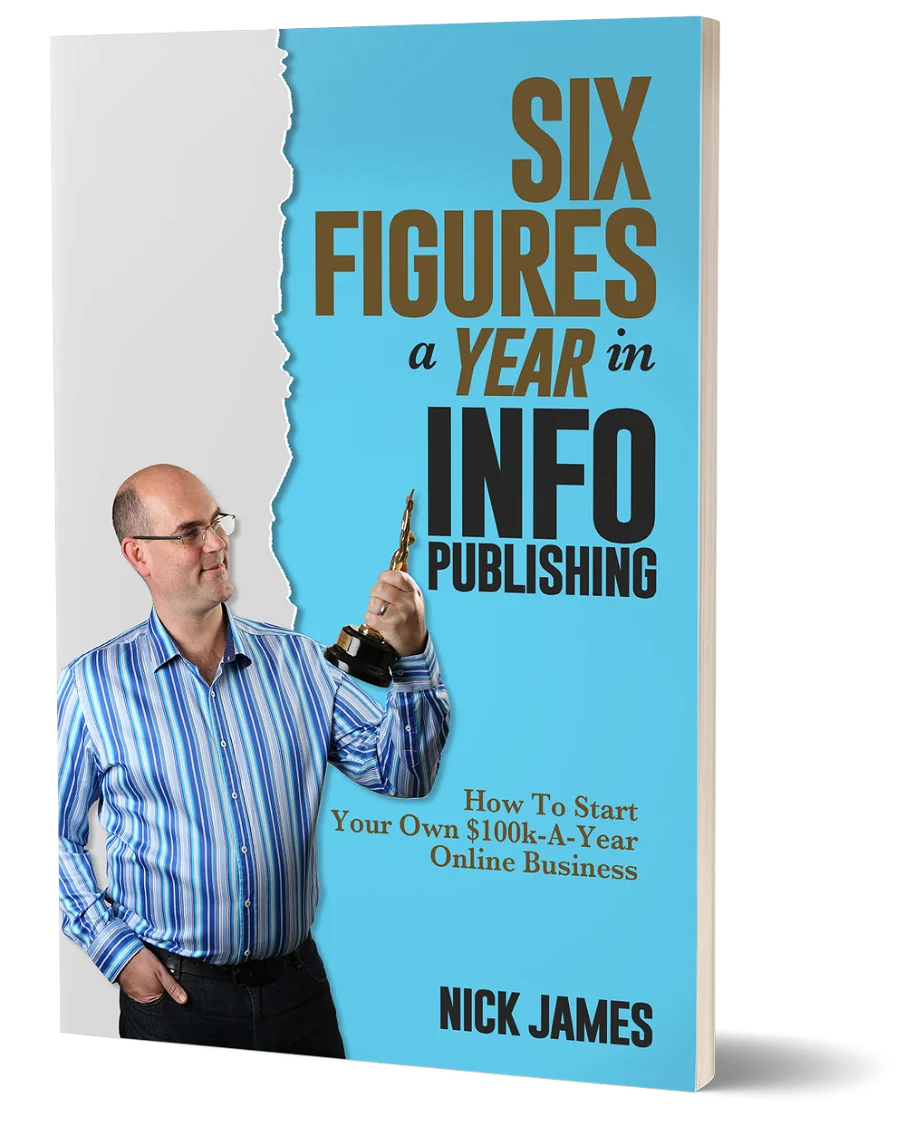
Author offers a FREE copy of this book to his next door neighbor... to prove he's not a drug dealer!
Now claim your FREE COPY.
and follow the step-by-step instructions for making the kind of money (and living the kind of lifestyle) that'll get your neighbors curtains twitching with curiosity!
Enter your details below to discover how to claim your FREE COPY of 'Six Figures A Year In Info Publishing' ...
Privacy Policy : We value your privacy. You can unsubscribe from receiving future emails with 1 click at any time.