
3 Overlooked Reasons Smart Marketers Treat AI As An Asset
Everyone I talk to seems to believe the same thing about artificial intelligence: that it is free, that it is unlimited. They believe it will stay that way. I think that belief is about to get expensive for a lot of people. Most of them will not see it coming until the bill changes.
For the past couple of years, one monthly fee has bought unlimited access to tools that used to take a whole team to run. Writing, research, design, code, all of it, as much as you like. It has been easy, under those conditions, to stop thinking of AI as a business asset at all and start treating it as something closer to background noise you barely notice using.
That is the belief worth challenging.
Several of the largest AI companies are already experimenting with usage-based pricing. More than one industry leader has suggested that intelligence itself could eventually be priced the way electricity is: you pay for what you use. If that happens, and I think it probably will, every prompt stops being free and starts being a small decision. Learning to treat AI as an asset now, while it costs nothing to learn, is the whole point of what follows.
Three Signs You Are Using AI Like a Toy, Not an Asset
There is a difference between using something because it helps and using something because it is simply there. Here are three signs worth checking honestly against your own week.
1. You cannot say what any single use of it earned you
If you ask AI to draft an email, write a product description, or research a competitor, you should be able to say, roughly, what that saved you or made you. If you cannot, you are not treating it as an asset, you are treating it as entertainment with a professional-sounding excuse.
Try this for a week: after every meaningful use, write one line noting what it actually produced. A saved half hour. A first draft you would otherwise have paid someone for. A piece of research that changed a decision. Most people who try this find the list is shorter than they expected, and that is the point. It shows you where the value genuinely sits, rather than where the habit simply sits.
2. You use it for everything, rather than the thing it is actually good at
Unlimited access encourages breadth over judgement. Brainstorming, rewriting, coding, research, endless small experiments, all fair enough when it costs nothing extra to try. Once cost is attached to volume, the businesses that do best will be the ones asking which tasks genuinely benefit, not which tasks are simply convenient to hand over. A marketer who uses AI to draft five headline options and picks the best is using it well. A marketer who asks it to write and rewrite the same paragraph a dozen times, hoping something better appears by accident, is using it because it is there, not because it is working as an asset should.
3. You have never once measured the return
Nobody I know tracks their AI use the way they would track a course purchase or a piece of software they pay a licence fee for. That is understandable while it is unlimited. It will not be sensible once it is metered.
What Changes Once You Treat It As An Asset
An asset, properly understood, is something that keeps producing value after the effort of creating it is finished. A blog post can bring visitors for years. A template can be reused hundreds of times. AI, used well, should behave the same way: one good prompt, refined once, applied repeatedly, rather than reinvented from scratch every single time. Most people currently do the opposite, starting from nothing every time they open the tool, which is exactly why the value never compounds.
I have written before about the difference between owning something in your business and simply renting access to it, in some of the other things I have covered recently. AI sits in exactly that category. Rented tools can change their terms overnight. Owned processes, the ones you have actually understood and built properly, do not.
None of this means AI stops being useful. It means the businesses that treat it strategically, rather than as an unlimited toy, are the ones that will barely notice when the pricing changes. They were never relying on unlimited use to begin with.
The Habit Worth Building Now
Before you open the next AI tool, ask what you are actually trying to produce, and whether this is genuinely the fastest route to it. That single question, asked consistently, changes how the tool gets used.
None of this means AI stops being useful. It means the businesses that treat it strategically, rather than as an unlimited toy, are the ones that will barely notice when the pricing changes.
I think this matters more than most people currently believe, because habits formed while something is free are very hard to unwind once it is not. Build the discipline while it costs nothing to build it.
Do that consistently, and treating AI as an asset stops being a New Year’s resolution. It starts being simply how you work.
Where This Leaves You
None of this requires you to abandon AI or panic about pricing that has not even changed yet. It asks you to build one habit: measuring what a tool actually does for your business, rather than assuming that using it more often is the same thing as using it well. It also asks you to notice which tasks you keep outsourcing to it without ever checking whether a five-minute manual job would have done just as well.
If you already run your business on some kind of repeatable system, this is a small addition rather than a rebuild. That might be a content calendar, an email sequence, or a simple weekly routine. If you do not yet have that kind of structure, it is worth building one before adding more tools on top of nothing.
Nick James put together Make Cash Like Clockwork for exactly that situation. It is a repeatable structure for turning consistent effort into consistent income, rather than a new tool added to an already scattered week. The structure matters more than the tool sitting on top of it, because a good system tells you what to automate, and AI is very good at handling whatever a good system asks of it. If your AI habit has grown faster than your actual system for using it, that is worth a look before you add anything else to the pile.
Best wishes for now,
Kate
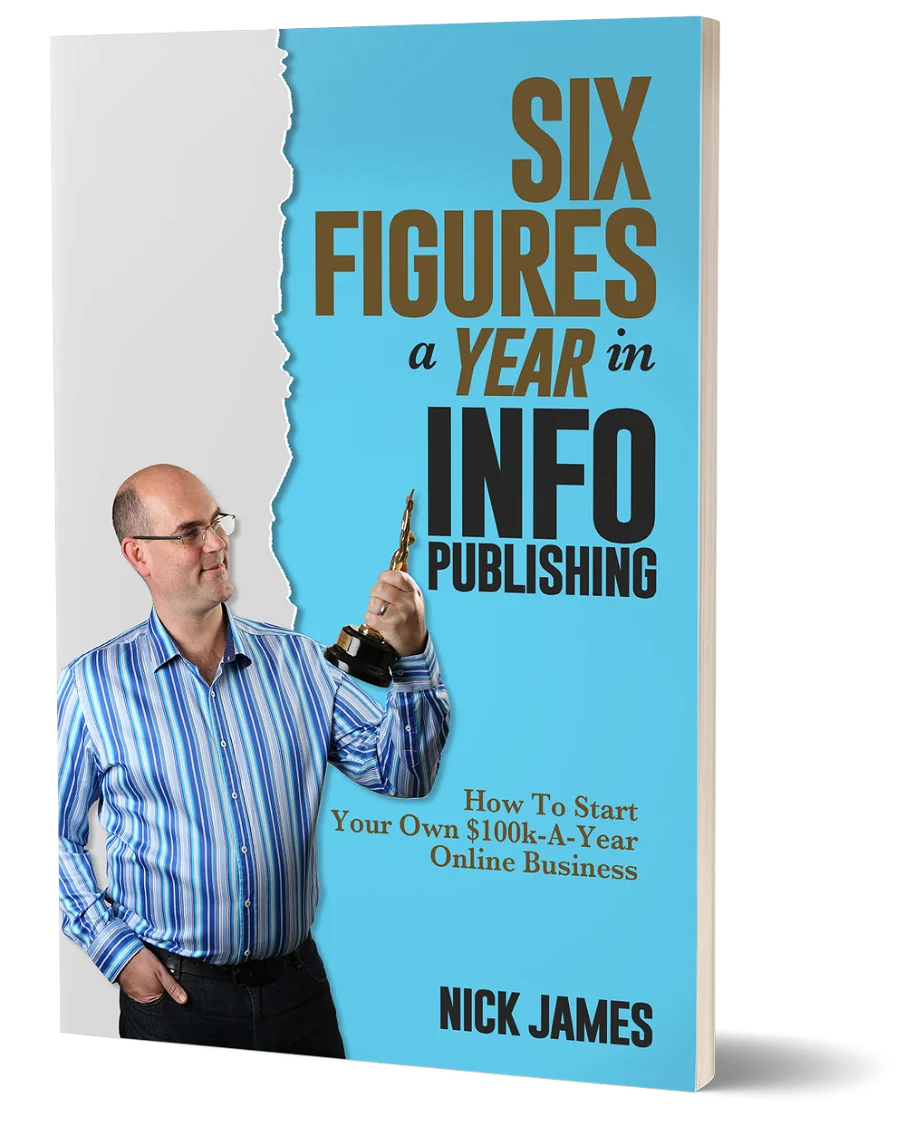
Author offers a FREE copy of this book to his next door neighbor... to prove he's not a drug dealer!
Now claim your FREE COPY.
and follow the step-by-step instructions for making the kind of money (and living the kind of lifestyle) that'll get your neighbors curtains twitching with curiosity!
Enter your details below to discover how to claim your FREE COPY of 'Six Figures A Year In Info Publishing' ...
Privacy Policy : We value your privacy. You can unsubscribe from receiving future emails with 1 click at any time.