The Hidden and Costly Truth About Your Cheapest Product
One of the things I’ve noticed over the years, sitting on the support and invoicing side of this business, is that the size of a customer’s problem rarely matches the size of their invoice. It rarely lines up the way you’d expect. Some of the shortest, cheapest orders generate the longest email threads, and I’ve had customers on our smallest products send more messages than someone who’s spent ten times as much on something substantial.
It sounds backwards. Shouldn’t the person spending less be the easier one to look after?
Not in my experience. If you’re building any kind of online business, whether that’s selling your own products or recommending someone else’s, this is worth understanding early. It changes how you think about your cheapest product and who it brings through your door.
The £7 Customer Can Cost More Than the £700 One
I’ve lost count of the times someone has bought the lowest-priced thing we sell, then written in a few days later saying, in one form or another, ‘nobody helped me’ or ‘I didn’t get any support.’ Sometimes that’s fair. Often, what happened is one email went unanswered on a Friday evening, and by Monday it had become a grievance.
Compare that with someone who’s invested properly in a product or a service. They’ve usually already decided the problem is worth solving, and they read the instructions before asking anything.
If something goes wrong, they tell you exactly what and let you fix it, rather than firing off a vague complaint.
Price doesn’t just decide what you earn. It decides who turns up.
Why Cheap Attracts a Different Mindset
When someone shops purely on price, price stays at the centre of every decision they make afterwards too. They compare, they wait for a better deal, and they wonder if they’ve been had. Then they go looking for reasons to justify the purchase, or to undo it.
Someone paying more has usually already made peace with the decision before they click buy. They’re not trying to save a few pounds; they’re trying to save themselves hours, or months, of getting somewhere on their own. You’ll see the difference in every support ticket, every refund request and every review that reaches your inbox.
I learned this the hard way with refunds, if I’m honest. Early on, every refund request felt personal, almost like an insult to the work behind it. I’ve since come round to seeing it differently: a refund is a business event, not a verdict on the product.
Now I try to save the sale first, and if that’s not possible, I process it and let the person go without chasing them. What matters for you is this: it happens far more often on the lowest-priced items than on anything priced and positioned properly, so if refunds are eating your week, check your cheapest product before you check anything else.
One familiar version of this: a customer buys the cheapest template on offer, expects it to function as a finished website without any input, and writes in confused when it doesn’t. Nobody who’s paid properly for a full build expects that from a template alone.
This Matters Even More If You’re Recommending Other People’s Work
If you’re building an audience around your recommendations, not just your own products, the same rule applies to what you point people towards. I still meet people who’ve bought PLR or licensed content, put it up exactly as it arrived, and changed nothing.
The product wasn’t the problem. The price of entry was so low that nobody felt they needed to do any real work on top of it, and a low-cost product treated that way will always disappoint the person who bought it.
You’ll recognise the pattern if you’ve ever watched someone buy a cheap template and expect it to run their entire business for them. It isn’t that the template is bad. It’s that nothing about a low price asked them to bring anything of their own to it, so nothing changed once they had it.
Contrast that with someone who buys the same template but treats it as a starting point rather than a finished asset. They tweak the copy, add their own examples, and test it against their own audience before publishing anything. The template didn’t change. What they brought to it did.
It’s the same with affiliate links dropped into a Facebook group or a forum with no list, no audience and no context behind them. Cheap, easy, and largely wasted, because nothing about the process asked the person clicking to commit to anything.
This pattern shows up often enough that I’ve written about it elsewhere too, alongside other patterns worth knowing on this side of the business. You can find some of it in a few other articles shared recently, if you want to see where else it’s turned up.
What To Do About It
None of this means low-price products have no place. They do have one. Just don’t expect them to carry your whole business, or to attract the customers who’ll stay with you longest.
Think of a low-ticket product as a handshake, not a foundation: a small template, a short guide, an inexpensive workshop. Its job isn’t to make you wealthy on its own. Its job is to introduce someone to how you think and work, well enough that the next, more serious step feels obvious to them rather than risky.
A £27 guide that solves one specific problem, sold to someone who has already raised their hand, will usually behave completely differently to the same guide sold cold at £7 to anyone who happens to scroll past. The price isn’t just a number. It’s a filter for who ends up on the other side of the sale.
In practice that might mean pricing your entry point low enough to remove hesitation, while building your main offer to reflect what it solves, with your best support reserved for the people who’ve made a real commitment.
If you’re constantly dealing with refunds, complaints and an inbox that never settles down, it’s worth asking a different question before assuming the product is at fault.
Am I attracting the wrong customers with the wrong price?
Price doesn’t just decide what you earn. It decides who turns up, how they behave once they’re through your door, and whether they’ll still be there in a year’s time.
Charging Properly Is Its Own Kind of Support
Some people hear ‘charge more‘ and assume it means being less generous. I’d say the opposite: pricing something properly, and being clear about what it does and doesn’t include, is one of the most respectful things you can do for a customer. It filters out the people who were only ever going to be disappointed, and leaves you with the ones who’ll use what you built.
If you’ve been putting off the decision to price your cheapest product the way it deserves, that’s usually the moment worth paying attention to.
If you want to go further with building something more substantial than a single low-cost product, Serious About Six Figures is worth a look. It’s built around treating an online business as something to take seriously rather than a collection of cheap one-off sales, which is exactly the shift this article has been circling around.
Best wishes for now,
Kate
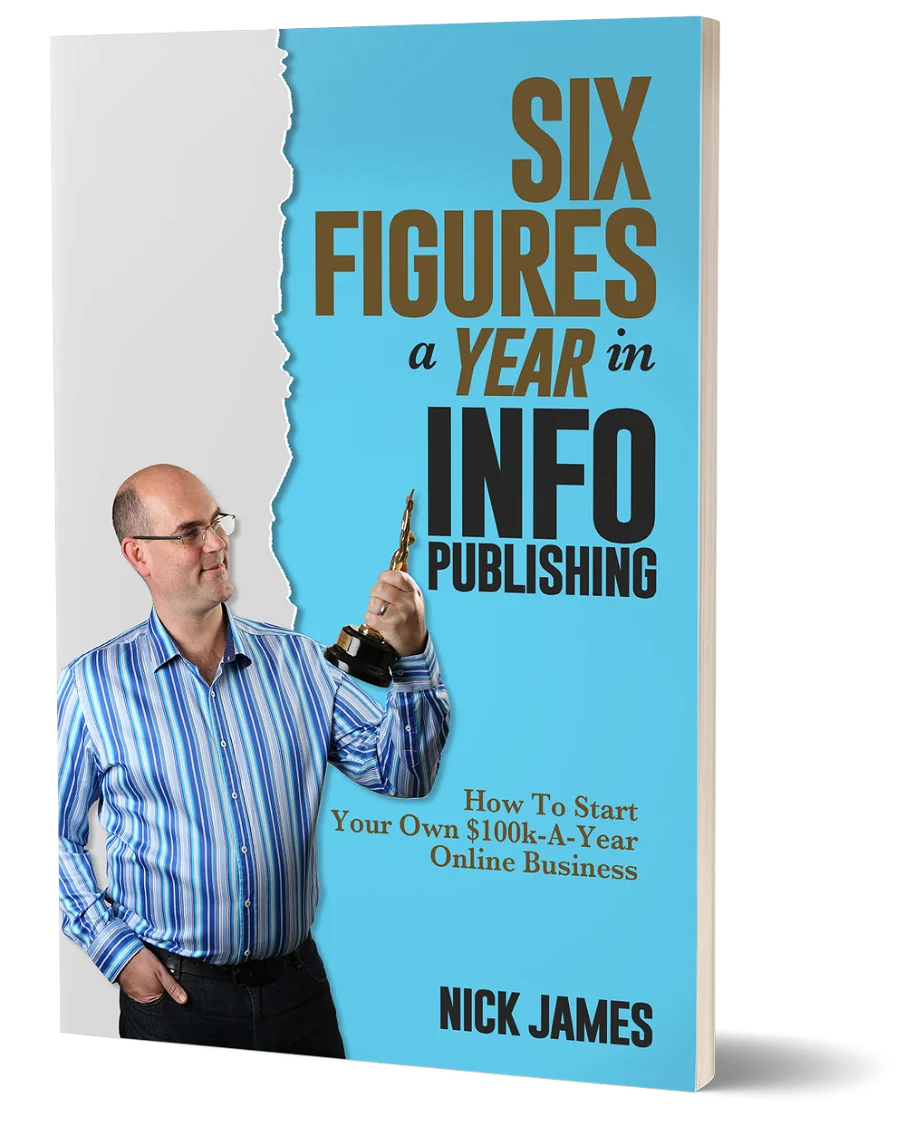
Author offers a FREE copy of this book to his next door neighbor... to prove he's not a drug dealer!
Now claim your FREE COPY.
and follow the step-by-step instructions for making the kind of money (and living the kind of lifestyle) that'll get your neighbors curtains twitching with curiosity!
Enter your details below to discover how to claim your FREE COPY of 'Six Figures A Year In Info Publishing' ...
Privacy Policy : We value your privacy. You can unsubscribe from receiving future emails with 1 click at any time.