The Overlooked Reason Most Licensed Products Turn Out Costly
“I didn’t get any support.” That’s the line I hear more often than any other, usually from someone who bought a licensed product, uploaded it, and waited for sales that never came.
It’s rarely true in the way they mean it. What actually happened is they bought something proven, changed nothing about it, told nobody it existed, and called the silence that followed a support failure. It wasn’t. It was a follow-through failure, and it’s a fixable one.
If you’ve bought licensed products before and felt let down by them, this is worth ten minutes of your time. The model itself is sound. What’s usually missing is the part nobody mentions when you first buy it.
Borrowing An Idea Isn’t The Shortcut It Looks Like
Nick James has made the point, in his own writing on this, that some of the biggest businesses around were built on something licensed rather than something invented from a blank page. That’s true, and it’s a genuinely useful thing to know if you’ve been waiting for your own brilliant original idea before you start.
You don’t need one. Licensed products exist precisely so you don’t have to write the promotional copy, design the graphics, or work out what the market wants before you can begin. That part has already been done for you, which is the whole appeal.
But here’s where I’d push back slightly on how that idea usually gets told. Licensing removes the need to create. It doesn’t remove the need to work.
Those are two very different things, and mixing them up is exactly where the disappointment starts.
Why “No Support” Rarely Means No Support
Part of my day-to-day for the last fourteen years has been sitting on the other side of a support ticket. I read the ones that say “nobody helped me” alongside the account history that shows one email, sent once, followed by silence.
Licensing removes the need to create. It doesn’t remove the need to work.
That’s not a dig at anyone. It’s an easy trap. A licensed product feels finished the moment you download it, so it’s natural to expect the results to feel finished too. They aren’t. The product is the starting material, not the outcome.
Most people I’ve watched succeed with licensed products did three unglamorous things nobody warns you about: they rewrote the promotional copy in their own words, they picked one specific audience instead of everybody, and they told people it existed more than once. One buyer I remember had sent a single email to her list, decided the product had not worked, and put it away in a folder. Months later she rewrote the opening paragraph, sent it to the same list a second time with a slightly different angle, and made her first sale that week. Nothing about the product had changed. The only thing that changed was her willingness to send it again.
I’ve written before, in some of the other articles I’ve shared recently, about the specific red flags worth checking before you buy a licensed product in the first place. This is the other half of that conversation: what to do once you’ve bought it properly.
The One Step That Actually Moves A Licensed Product
If you only do one thing differently with your next licensed product, make it this: rewrite the opening of whatever promotional email comes with it, in your own voice, before you send a single copy.
Not the whole promotional letter. Just the opening. Say why you personally think this is worth someone’s time. That’s it.
It takes twenty minutes. It’s the single easiest way to turn a product that reads like everybody else’s copy into something that sounds like it came from an actual person who bothered to think about the reader on the other end.
Take a typical opening line for a licensed report on productivity: Discover the system successful people use to get more done. It’s not wrong, exactly. It’s also identical to the line sitting in a hundred other inboxes this week. A twenty-minute rewrite might turn it into something like: I expected another list of tips I’d ignore by Friday. The third page changed my mind. Same product underneath. Only one of them reads like it came from a person.
I think this matters more than people expect, because a licensed product’s biggest disadvantage is that dozens of other people own the exact same words. Your voice is the one thing nobody else licensed.
What A Better Licence Actually Gives You
Not every licensed product is built the same way, and the packaging around it matters more than most buyers realise. A product that hands you a finished sales copy, graphics, follow-up emails and clear rebranding rights saves weeks that a bare licence with none of that simply doesn’t.
The unglamorous part looks smaller than people expect. It’s picking one audience, home-schooling parents on a budget, say, rather than anyone who wants to make money, and writing the opening with just them in mind. It’s mentioning the product to your list more than once, because most people who buy something on the fourth mention never saw the first three. None of that requires a talent you don’t have. It requires deciding to do it before the licence goes stale on your hard drive.
If you’d like a package built with exactly that in mind, Product Licensing Formula is worth a look. Nick James put it together to cover the parts of licensing most guides skip past: finding a product with real demand behind it, and knowing what to actually do with the licence once it’s yours. It won’t do the twenty minutes of rewriting for you. Nothing will. But it removes most of the other excuses.
The Part Worth Remembering
Licensed products don’t fail because the model is broken. They fail quietly, in the gap between “I bought it” and “I did something with it.”
Close that gap and the product you already own is probably good enough. You just haven’t finished it yet.
Best wishes for now,
Kate
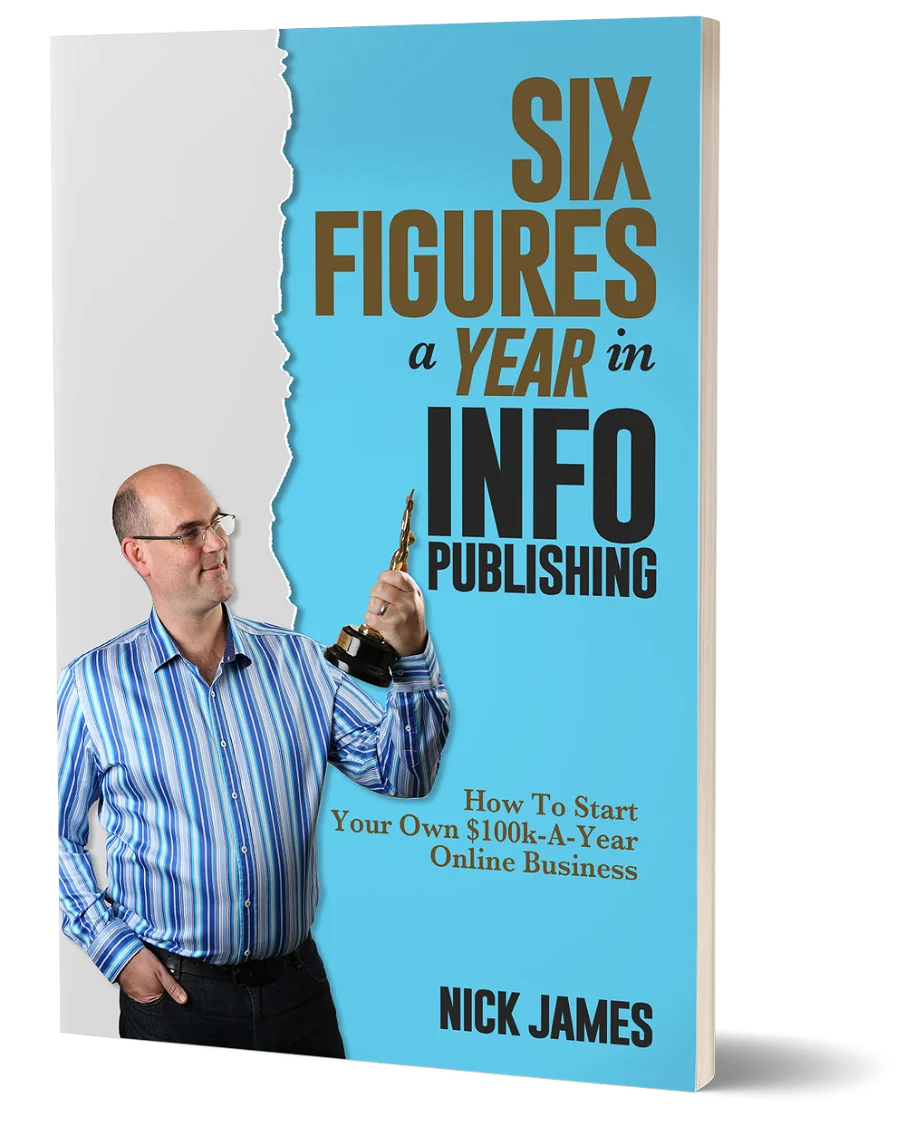
Author offers a FREE copy of this book to his next door neighbor... to prove he's not a drug dealer!
Now claim your FREE COPY.
and follow the step-by-step instructions for making the kind of money (and living the kind of lifestyle) that'll get your neighbors curtains twitching with curiosity!
Enter your details below to discover how to claim your FREE COPY of 'Six Figures A Year In Info Publishing' ...
Privacy Policy : We value your privacy. You can unsubscribe from receiving future emails with 1 click at any time.