
The Overlooked Fix That Makes Your Products Sell For Real
If your digital product isn’t selling, the fix is almost never the product itself, and I’ve watched why play out up close, year after year. I run the launches for our Internet Marketing Newsletter PLR business once or twice a year. Alongside the ongoing $47 a month subscriptions that keep it ticking over in between, the two bring in around $100,000 a year, which sounds tidy enough until you sit behind the scenes of it.
That $100,000 a year figure is combined launch-period and ongoing subscription revenue for one specific, established product built up over time, not a guarantee of what any individual launch or business will produce.
I start recruiting affiliates six to eight weeks before a launch goes live. I build the JV page, write the swipe emails, put together the banners, get the countdown timer running, and set up a leaderboard with a prize pool. A bit of friendly competition between affiliates does more for a launch than almost anything else I have tried.
Day one and the closing day are always the busiest. Scarcity, and a bit of competitiveness, every single time.
None of that happens by accident, and none of it happens because the product is good enough to sell itself. I mention it because it is the exact mistake I see in people trying their hand at selling digital products of their own. They assume a decent product, sitting on a page somewhere, is the whole job. It never has been. Getting a digital product to sell is a separate piece of work, and it is the piece almost nobody teaches properly.
Why Most Digital Products Never Get A Chance
Most people buy a licensed or PLR product, upload it, and wait, treating selling digital products as something that happens automatically once it’s online. When nothing happens, the conclusion is almost always the same: the product wasn’t good enough, or “nobody helped me” set it up properly.
Usually that isn’t it at all.
The product was never tested against a real audience before it went up. Nobody checked whether people were already spending money on something similar. A product built for a market that doesn’t exist will sit there quietly, no matter how well it’s written. No vendor support call fixes that.
Before you put anything up for sale, ask a much duller question than “is this a good product?” Ask “are people already buying something like this?” You’ll find the answer on Amazon, on Etsy, in Facebook groups, in the comments under other people’s launches. If the answer is yes, you’ve found somewhere worth putting your effort. If it’s no, no amount of polish will save it, as I’ve covered in other articles I’ve shared recently.
The Price Most Sellers Are Too Nervous To Charge
The second mistake is almost the opposite problem, and it’s the one I see constantly among people just starting out. They price everything low, on the theory that cheap sells more.
It often does the reverse.
A price that’s too low attracts people who are shopping on price alone. They compare everything, they hesitate, they buy, and then they look for reasons to want their money back. Someone who pays a fair, considered price has usually already decided the problem is worth solving. They implement faster. They complain less.
A price that’s too low doesn’t just cost you money. It changes who turns up to buy from you in the first place.
I’ve watched this play out in our own launches. The customers who paid full price and stayed for the ongoing subscription are, almost without exception, easier to look after than the ones chasing a discount. Pricing isn’t only about revenue. It’s a filter.
Proof Beats Polish Every Time
Somebody buying a digital product can’t hold it, flip through it, or try it out first. All they have to go on is whether someone else vouches for it.
That’s why a genuine, specific testimonial does more work than another paragraph describing how good your product is. One subscriber, Andrew T., once emailed simply to say he’d been reading our newsletter a few months and found it “very interesting and useful.” It’s one person’s honest reaction, nothing more, and it still tells a new reader something no amount of my own description could. It is worth remembering that this is one individual subscriber’s comment, not something representative of every subscriber’s experience, and it carries weight precisely because it isn’t dressed up as anything more than that.
If you’re launching something new, ask your first handful of buyers directly for their honest reaction before you ask for anything else. A single specific sentence from a real customer, kept exactly as they wrote it, will do more for your next hundred sales than a page of your own claims about the product. Those early responses are worth more than they look at the time.
One Product Is Never The Whole Business
Here’s the part people selling digital products tend to miss completely. One product, however good, only opens one door.
Someone discovers your checklist. Somebody else finds your template. A different person entirely buys your guide. Each is a different route in, and each new product makes the ones either side of it more likely to sell too.
Our own PLR launches work the same way underneath. It isn’t one product doing all the work. It’s the newsletter, the ongoing subscription, and the launches, each supporting the others, each bringing a slightly different type of buyer through the door. A subscriber who joins the newsletter for free content today might buy a launch product next year, simply because they were never asked to commit to anything bigger before they were ready. Treat your first product as the beginning of a small catalogue, not the whole answer.
You Still Have To Bring The People
None of the above matters if nobody sees the product in the first place. This is the bit people skip most often, usually because it’s the least glamorous part of the whole job.
You have to find your buyers. That means writing, showing up in the communities where they already gather, and building an email list. It means treating every subscriber as a real person rather than an address on a spreadsheet. I still keep notes on the people I deal with, the way I did years ago when I worked in recruitment. It’s the same habit, just applied to a different kind of relationship.
Nobody arrives at your product by accident. Somebody has to bring them.
It isn’t the flashy part of building a digital product business. It’s the part that decides whether the rest of it ever gets a fair test.
Where This Leaves You
None of this requires a huge budget or a lucky break. It requires checking the market before you build, pricing with a bit more confidence than feels comfortable, and gathering honest proof. It means thinking in a small catalogue rather than a single product, and doing the work of finding your own buyers.
That’s the whole difference between a product that quietly does nothing, and one that keeps selling long after the launch excitement has worn off.
Best wishes for now,
Kate James
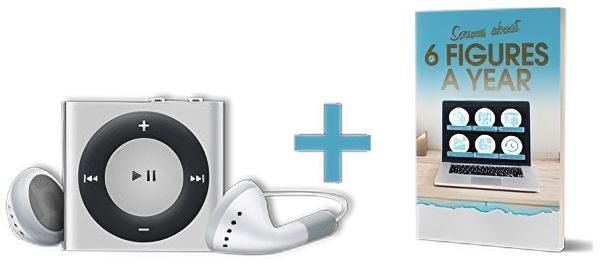
Claim Your Free MP3 And PDF Training: The 3-Part Plan To Topping $100,000 Per Year In Profit
Enter your name and email address below to receive a new lesson delivered to your inbox once a week. Your first lesson will be delivered immediately.
Privacy Policy : We value your privacy. You can unsubscribe from receiving future emails with 1 click at any time.