
How To Discover If AI Is Missing Your Business From Its Recommendations
Most business owners assume a well designed pricing page is doing exactly what it is meant to do. Increasingly, AI customer recommendations are deciding otherwise.
A growing number of people are not typing a business name into Google at all. They are asking ChatGPT, or one of the other AI assistants, something like “what is the best email marketing platform under thirty pounds a month”. Or “find me the cheapest way to build an online course.” The AI researches, compares, and often recommends a single option before the customer ever lands on a website.
If that AI cannot make sense of your pricing, your plans, or what you actually offer, it moves on to a business it can understand. Not because your offer is worse. Because your page was never written with a machine reader in mind.
That matters for anyone building an online business, however small it currently is. If your AI customer recommendations depend on a page designed purely to look good to a human, that’s a problem. You may already be invisible to a customer you never knew existed.
What’s Actually Happening
For years, marketers optimised for Google. Write good copy, add the right keywords, and hope a human visitor liked what they saw enough to buy.
AI assistants work differently. They do not browse the way a person does. They read, summarise, and compare, often across several competing businesses at once, then hand the customer one confident recommendation.
That recommendation is based entirely on what the AI can extract cleanly from your website. If your pricing lives inside an interactive table, a pop up, or a slider that only makes sense to a human clicking through it, that’s a barrier. The AI may simply skip it.
This is not a future problem. It is already happening, quietly, on ordinary pricing pages that were never built with anything other than a human visitor in mind.
Why A Page Built For People Confuses A Machine
Most pricing pages are designed to look impressive: animations, coloured boxes, comparison tables that expand when you click them, and plenty of visual polish.
All of that is built for a human eye, not a text-reading system. Code-heavy layouts, embedded widgets, and pricing hidden behind a “get a quote” button are all things an AI struggles to interpret with any confidence. That’s what keeps a business out of AI customer recommendations altogether.
Some companies have already noticed this. They’ve quietly published a second, plain text version of their pricing, listing plans, prices, limits, and frequently asked questions with no design at all.
It reads badly to a human. It reads perfectly to an AI.
Before you make any changes to your own site, it is worth having a proper look at what you are already publishing. That’s exactly what other articles I have shared recently cover, touching on this shift in how customers now find businesses.
The next customer who chooses your product may never read your beautifully designed pricing page.
The Simple Fix Anyone Can Make This Week
You do not need a developer, and you do not need to redesign anything you already have.
Create a single, plain text or Markdown page that lists your plans, your prices, and what is included in each one. Add your billing options and the answers to the questions people ask most often. No animation. No design. Just clear, complete information written the way you would explain it to someone over the phone.
Think of it as writing your pricing page for an AI researcher instead of a human visitor. It does not replace your existing page. It sits alongside it, doing a completely different job.
This one small change is one of the few overlooked pieces of housekeeping left in online marketing at the moment. Everyone is talking about creating content for AI. Almost nobody is talking about making their existing offer readable by it.
What This Means If You’re Building A List
A lot of my own day to day work is unglamorous. I manage our subscriber database and correct typos in people’s opt in details. I also handle invoicing across our UK and US operations, and generally keep the records straight behind the scenes.
I think that work matters more than it looks like it should. A clean, well organised record of who your customers are and what they bought has always paid for itself, long before AI assistants came into the picture.
The same discipline now applies to how you describe your offers. A pricing page that is missing clear detail is not just slightly less appealing to a human visitor who is in a hurry. It is a page an AI may quietly leave out of its recommendations altogether. That means a customer who would happily have bought from you never even gets the chance to consider it.
Nobody is suggesting you abandon the page you have spent time making look good. Just make sure there is a second, plain version sitting behind it, doing the quieter job of being understood.
Start With The Offer You Already Have
You do not need a new product, a new system, or a new platform to act on any of this. You need an honest, complete description of what you already sell, written in plain language, somewhere an AI assistant can actually read it.
That is a smaller job than it sounds, and it is one you can finish this week rather than adding it to a list of things you mean to get to eventually.
Do that much, and you have taken care of one of the few things in this shift that is fully within your control.
Whatever else changes about how people discover businesses over the next few years, being clearly understood will never stop mattering. That much, at least, has not changed at all.
Best wishes for now,
Kate
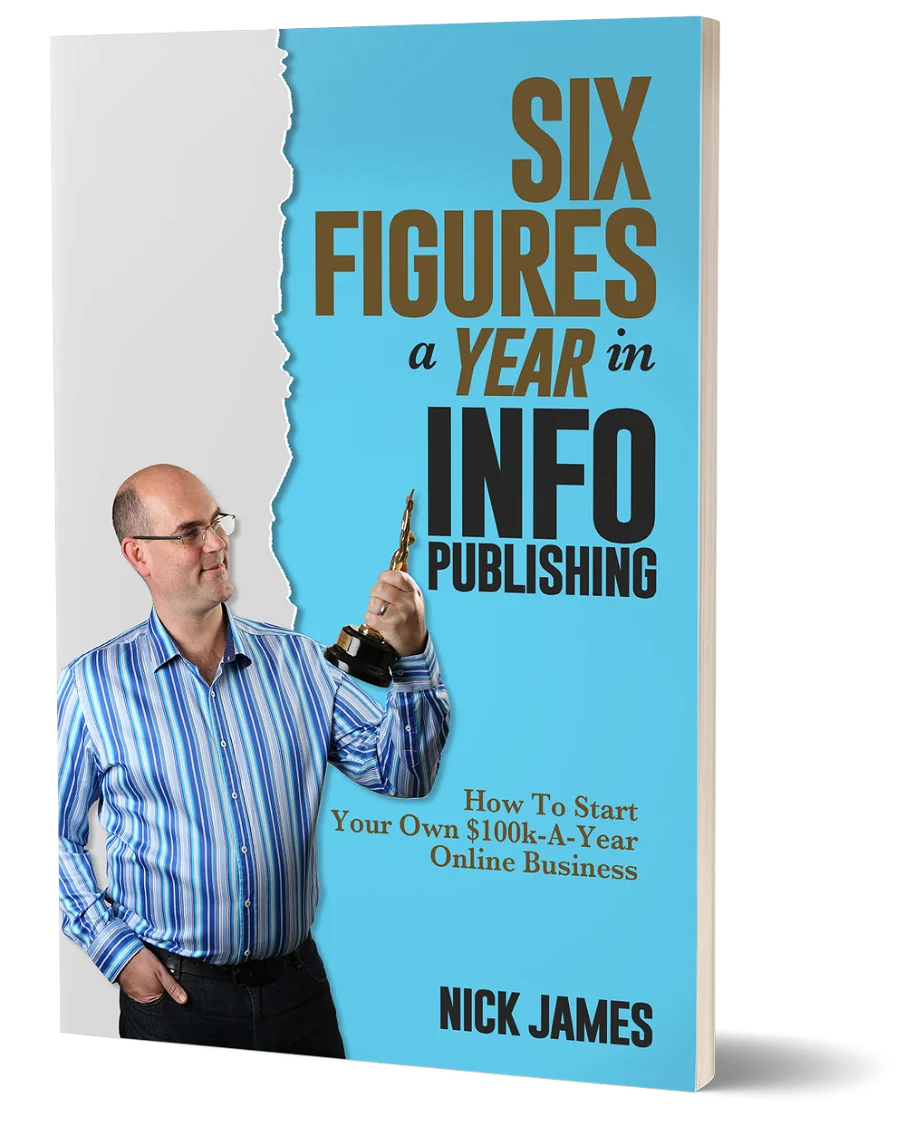
Author offers a FREE copy of this book to his next door neighbor... to prove he's not a drug dealer!
Now claim your FREE COPY.
and follow the step-by-step instructions for making the kind of money (and living the kind of lifestyle) that'll get your neighbors curtains twitching with curiosity!
Enter your details below to discover how to claim your FREE COPY of 'Six Figures A Year In Info Publishing' ...
Privacy Policy : We value your privacy. You can unsubscribe from receiving future emails with 1 click at any time.