
The Smart Way To Uncover Content Ideas Your Audience Already Gave You
Most people assume the fastest way to find something worth writing about is to ask AI for a list of content ideas. Type a prompt, wait a few seconds, and out comes ten more options to pick from.
I think that is mostly a waste of a good afternoon.
Everyone doing the same thing is typing a near-identical prompt into the same tool, which means you are all fishing in the same generic pond.
The best content ideas are not sitting inside a chatbot. They are sitting in your own inbox, your own comments section and your own support folder. Usually it comes from someone who has already told you, in their own words, exactly what they are stuck on.
A good part of my week is spent on subscriber support and database management for our business, correcting opt-in typos and answering renewal questions. I also read messages from people who are clearly stuck on something specific.
None of that looks like market research. All of it is, if you pay attention to the right parts.
Where The Real Questions Already Live
Open your own support inbox and read the last twenty messages properly, rather than skimming them to clear the unread count.
Look for the question someone asks more than once. Look for the message that starts with “I am confused about” or “can you explain”. Look for the polite complaint that is really a question in disguise, something like “I did not realise it worked that way”.
Comments under your own posts carry the same signal. So do the replies you get to a newsletter, the objections you hear before someone buys, and the reason people give when they cancel.
A cancellation message that says “I never got round to using it properly” is not just feedback. It is a content idea, telling you exactly what your next email, post or guide needs to cover.
Build A List Instead Of Trusting Memory
You will not remember these patterns reliably unless you write them down somewhere.
Keep it simple. Four columns is enough: the question, where you found it, what you have already said in reply, and a sharper angle you could take if you wrote about it properly instead of answering it once in a hurry. Add to it whenever something recurring crosses your desk.
This is the same habit I rely on elsewhere. I have written a bit more about building that kind of system in other articles I have shared recently, if it is useful to see it applied a different way.
Within a fortnight you usually have more genuine content ideas than you could use in a month, and every single one of them is proven to matter, because a real person already asked it.
One Good Answer Can Become Several Things
Here is the part most people miss. A single question, answered properly once, does not have to stay a single piece of content.
The same answer can become an email to your list, a short social post, or a line added to your FAQ page. It can also become the opening paragraph of a longer article that goes into more depth than the original reply ever could.
You did the thinking once. You are simply packaging it several ways.
That is a far better use of your time than inventing a topic from scratch and hoping it happens to land with anyone.
It also means your voice stays consistent across everything you publish. Every version traces back to a real conversation rather than a generic prompt result.
Why This Beats Guessing, Every Time
Guessing feels productive. You sit down, brainstorm, and walk away with a list of titles. The trouble is that none of those titles have been tested against a real person’s actual confusion.
A question pulled from your own inbox has already been tested. Somebody cared enough to type it out and send it to you.
That is a stronger signal than any keyword tool or AI suggestion will ever give you. It came from someone who was already paying attention to what you do.
This approach also suits anyone working with licensed or PLR material, where the usual problem is not having anything original to say. You do not need to invent original material from nothing.
You need to notice what your own audience is already handing you. Then be willing to answer it properly rather than once, briefly, in a support reply nobody else will ever see.
It will not feel glamorous. Most good systems do not. But a short list built from real questions will outlast a hundred ideas generated to sound impressive and answer nothing in particular.
Start with twenty minutes in your own inbox this week. You will very likely find your next month of content ideas waiting there already. Not from AI, but from somebody who was simply trying to get an answer.
Best wishes as always,
Kate
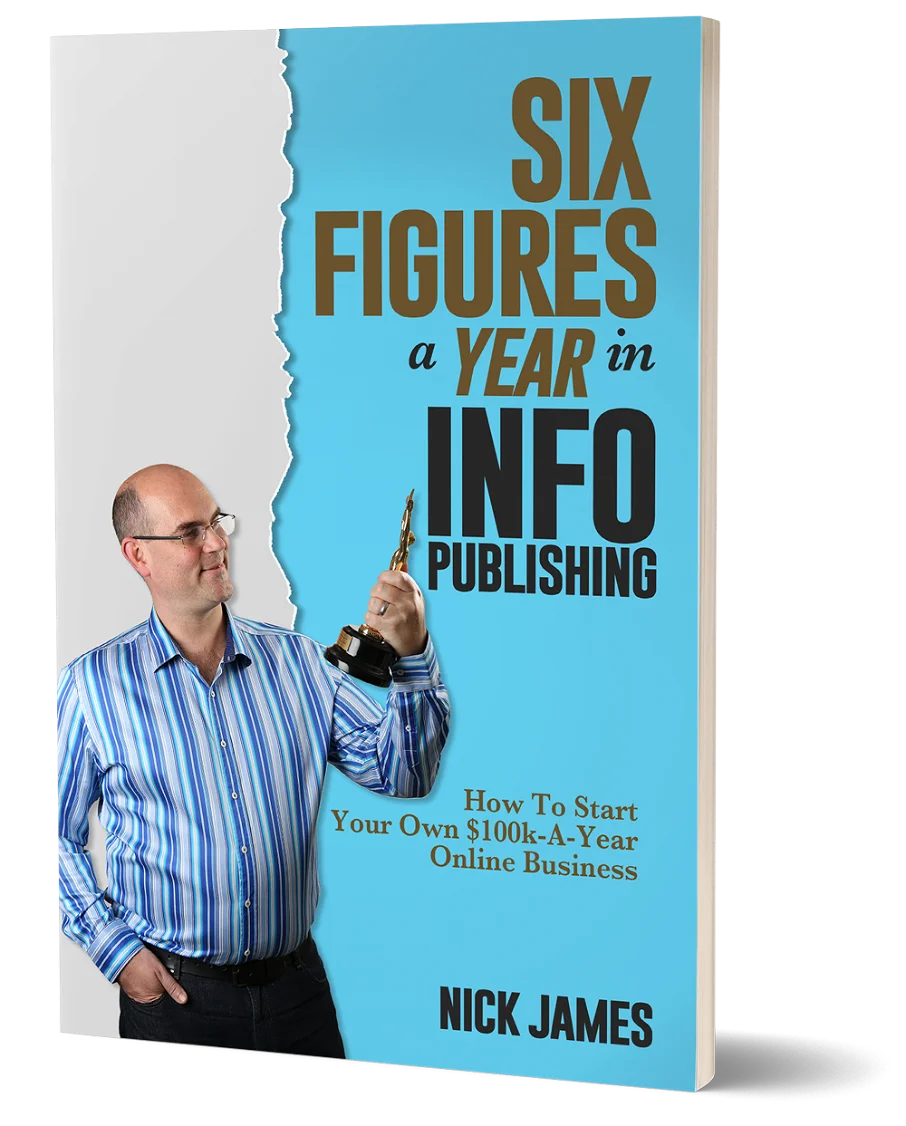
Author offers a FREE copy of this book to his next door neighbor... to prove he's not a drug dealer!
Now claim your FREE COPY.
and follow the step-by-step instructions for making the kind of money (and living the kind of lifestyle) that'll get your neighbors curtains twitching with curiosity!
Enter your details below to discover how to claim your FREE COPY of 'Six Figures A Year In Info Publishing' ...
Privacy Policy : We value your privacy. You can unsubscribe from receiving future emails with 1 click at any time.


