
The Surprising Money-Back Guarantee Secret
Most people assume a strong guarantee is something you earn the right to offer once you are already established. I used to think so too, back when a refund request still felt like a personal insult rather than an ordinary business event.
Here is the part that surprised me. A buyer does not hesitate over your price so much as they hesitate over one quiet question. What happens to me if this does not work? A lower price never answers that question. A clear money-back guarantee does, and it does it before anyone has to ask.
That shift in thinking changed how I handle every refund that lands in our inbox, and it is worth passing on. The businesses doing well with this right now are not the ones with the lowest prices. They are the ones willing to carry the risk themselves.
Why a Lower Price Never Answers the Real Question
When someone is deciding whether to buy, they are not simply weighing the price against their bank balance. They are weighing it against a memory, usually a bad one, of a product that promised something and quietly failed to deliver it.
A discount does nothing to touch that memory. A money-back guarantee does. It tells the reader plainly that if the product does not work for them, the loss belongs to the seller, not to them.
That single sentence does more to move a hesitant buyer than almost anything else you can put on the page.
The Refund That Stopped Feeling Personal
Early on, every refund request felt like a verdict on the work behind the product. I would read one and take it as a quiet accusation that what we had built was not good enough. It stung every single time.
It took me a while to see the parallel I was missing. A refund is exactly what a money-back guarantee promises. Treating it as an insult meant I had never quite believed our own guarantee in the first place.
These days I try to save the sale first, where that is the right thing to do. If it is not, I process the refund, update the database, and let the customer go without chasing them.
A refund is a business event, not a personal judgement.
That is the mechanism a guarantee runs on, whether you are the one writing it or the one honouring it later. Once you stop seeing a refund as proof of failure, offering a strong guarantee gets a great deal easier. You already know you can handle the result.
What Makes a Guarantee Believable
Nick James, who has tested guarantees across thousands of sales messages since 2001, has made a point I think about often. A vague promise reassures nobody. Something like “satisfaction guaranteed” gives a wary reader nothing they can picture.
A plain version works far better. Use it for sixty days. If it does not help you, ask for your money back. No hoops, no fine print.
The simpler the wording, the more readily people believe it, and the fewer refunds a business tends to see, not more. I have found the same thing true in our own support inbox. The customers most likely to ask tricky questions are the ones reading a guarantee loaded with conditions, because conditions read as a warning sign.
I write a bit more about small trust signals like this in other articles I have shared recently, and the pattern keeps repeating. Clarity reassures. Hedging does not.
The Trap That Makes a Guarantee Backfire
A guarantee stuffed with conditions does not lower the risk for your reader. It raises it.
If someone has to remember three rules and a deadline before they qualify for their money back, the guarantee has already failed. It has stopped feeling like a promise. It starts feeling like a maze designed to keep their money rather than return it.
Keep the terms plain enough that your reader could repeat them back to you from memory. If they could not, the guarantee needs simplifying before it goes anywhere near your page.
Building Your Own Guarantee
Start with the one fear your buyer carries, not the one you imagine they carry. Name it to yourself plainly before you write a word of the guarantee itself.
Then answer it directly. State the timeframe. State exactly what happens if your buyer is unhappy. Leave nothing for them to guess at, because guessing is where doubt lives.
Once it is published, keep the promise every single time someone tests it. How you handle that very first refund decides whether that person walks away quietly or comes back once they are ready to buy again.
Where This Leads Next
Guarantees are one piece of a much bigger conversation about how a page earns a stranger’s trust. That conversation really belongs inside the whole sales letter, not just the paragraph where the promise sits.
Nick James built a complete training on exactly that called One Letter From Retirement. It walks through writing a single sales letter built to keep working long after it goes live, guarantee included. It is a sensible next step if you want the rest of that structure, not just this one piece of it.
Worth a look if a clear guarantee is the part you have been missing.
The Honest Version Wins
None of this asks you to be braver than you feel. It asks you to say plainly what you are already willing to do if something goes wrong.
I learned that the hard way, treating refunds as insults for longer than I should have. Once I stopped doing that, writing an honest guarantee stopped feeling risky at all. It felt like the easiest sentence on the page.
Write yours this week, and mean every word of it.
Best wishes for now
Kate
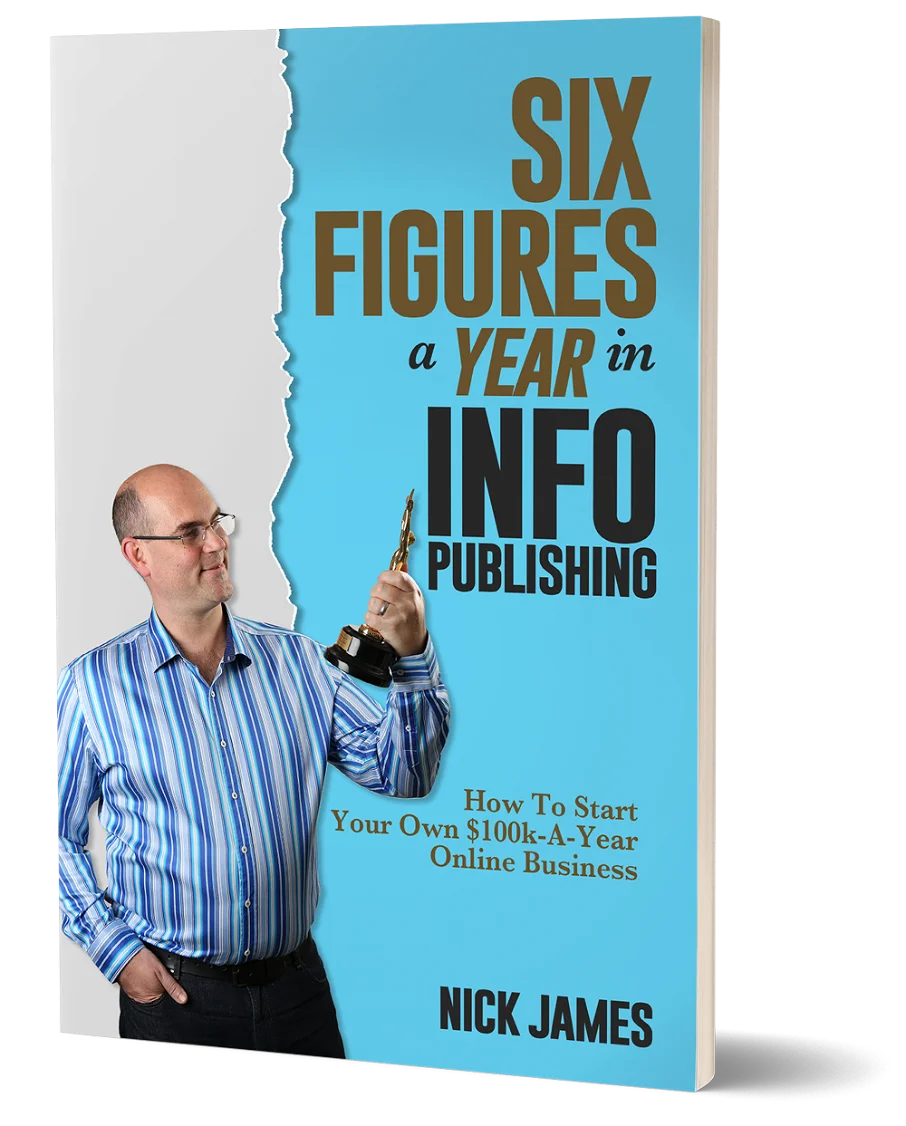
Author offers a FREE copy of this book to his next door neighbor... to prove he's not a drug dealer!
Now claim your FREE COPY.
and follow the step-by-step instructions for making the kind of money (and living the kind of lifestyle) that'll get your neighbors curtains twitching with curiosity!
Enter your details below to discover how to claim your FREE COPY of 'Six Figures A Year In Info Publishing' ...
Privacy Policy : We value your privacy. You can unsubscribe from receiving future emails with 1 click at any time.


