
How to Stop Wasting Critical Hours on the Wrong AI Tasks
Picture the average evening. Laptop open on the sofa, three AI tools running in different tabs, one summarising a report you haven’t read, one drafting an email you haven’t sent, one generating an image you probably won’t use. None of it is quite finished. None of it has moved your business forward. And somewhere in the middle of all that clicking, the thought arrives: I just don’t have the time for this either.
That’s the odd thing about AI right now. It was supposed to buy back hours. For a lot of people building something on the side, it’s quietly become another way to spend an evening without much to show for it.
The good news is that using AI strategically is a completely different habit to using it constantly, and it’s one worth building now, because the free ride on unlimited access almost certainly won’t last forever.
The Unlimited Feeling Is Doing Some Damage
For the past couple of years, most of us have paid one monthly fee and used AI as much as we liked. That flat-rate feeling changes behaviour. When something feels unlimited, people stop asking whether it’s worth doing.
So AI gets asked to brainstorm, rewrite, summarise, design and research, often all in the same sitting. These are tasks that were never the actual bottleneck in the business.
The newest AI models need serious computing power behind them. Several providers have already started experimenting with charging separately for their strongest models, or limiting usage once you go past a certain point. Some industry voices have talked about intelligence eventually being priced more like electricity: you pay for what you use.
Nobody knows the exact shape that will take. But the direction is clear enough that it’s worth changing the habit before the bill forces the change for you.
What Changes When It Isn’t Free Anymore
Once a tool costs something per use, every prompt quietly becomes a decision. That’s not a bad thing. It’s closer to how the rest of the business already works.
Treat AI like a business asset, not an unlimited toy.
Nobody would spend three hours a day fiddling with a piece of software that wasn’t touching sales, subscribers or income in some way. Yet that’s exactly what happens with AI when it feels free.
Using AI strategically means asking a single question before you open the tab: is this the highest-value thing you could be doing with the next twenty minutes? Sometimes the answer is simply yes. Sometimes it’s a template, a swipe file or a checklist someone else has already built properly, and no amount of prompting will beat that.
Where AI Earns Its Keep
I’ve written a few other things recently, which you’ll find in my recent updates, about the difference between tasks and assets in an online business. AI sits firmly on the task side of that line. It doesn’t build the list, the relationship or the trust. It can, however, remove the friction that stops you getting to those things.
Used well, it’s excellent for speeding up research before you write to your list. Useful for a first pass at a page of promotional copy you’ll then edit properly. Handy for turning one long article into several shorter pieces for social media, once the thinking behind it is yours.
Used badly, it becomes an infinite loop of asking for one more version of something that was never the problem in the first place.
A Habit Worth Building Before You’re Charged For It
My own view, having watched licensed and PLR products get used for years, is that the tool was never really the issue. Someone hands over a well-built product, and it fails not because the product was weak. It fails because nobody rebuilt it properly, made it their own, or followed through on the work it needed.
AI is heading toward the same lesson, just faster. The businesses that get real value from it won’t be the ones firing off the most prompts. They’ll be the ones who know exactly which twenty minutes of AI use pays for the other seven hours of the day. That’s what using AI strategically looks like in practice.
That’s a habit worth building now, whilst it still feels optional. Better that than being forced into it the day a bill lands with a number attached.
If You Want the Proper System, Not Just the Shortcut
Nick James put together the Product Licensing Formula for exactly this reason. It’s built around the same principle running through this article: a good asset only pays off once it’s properly reworked and positioned.
That applies whether it’s a licensed product or a piece of AI-drafted content. It has to be made properly useful to the person receiving it.
It’s worth a look if you’ve ever picked up a product, licensed or otherwise, and known there was value in it you weren’t quite extracting. The thinking behind it is the difference between owning something and merely holding onto it.
Wherever you land with AI over the next year, keep asking the question that matters. It isn’t “what can this tool do” but “what is it doing for me, specifically, today.”
Wishing you a productive week ahead, whatever tools end up in it.
Best wishes for now,
Kate
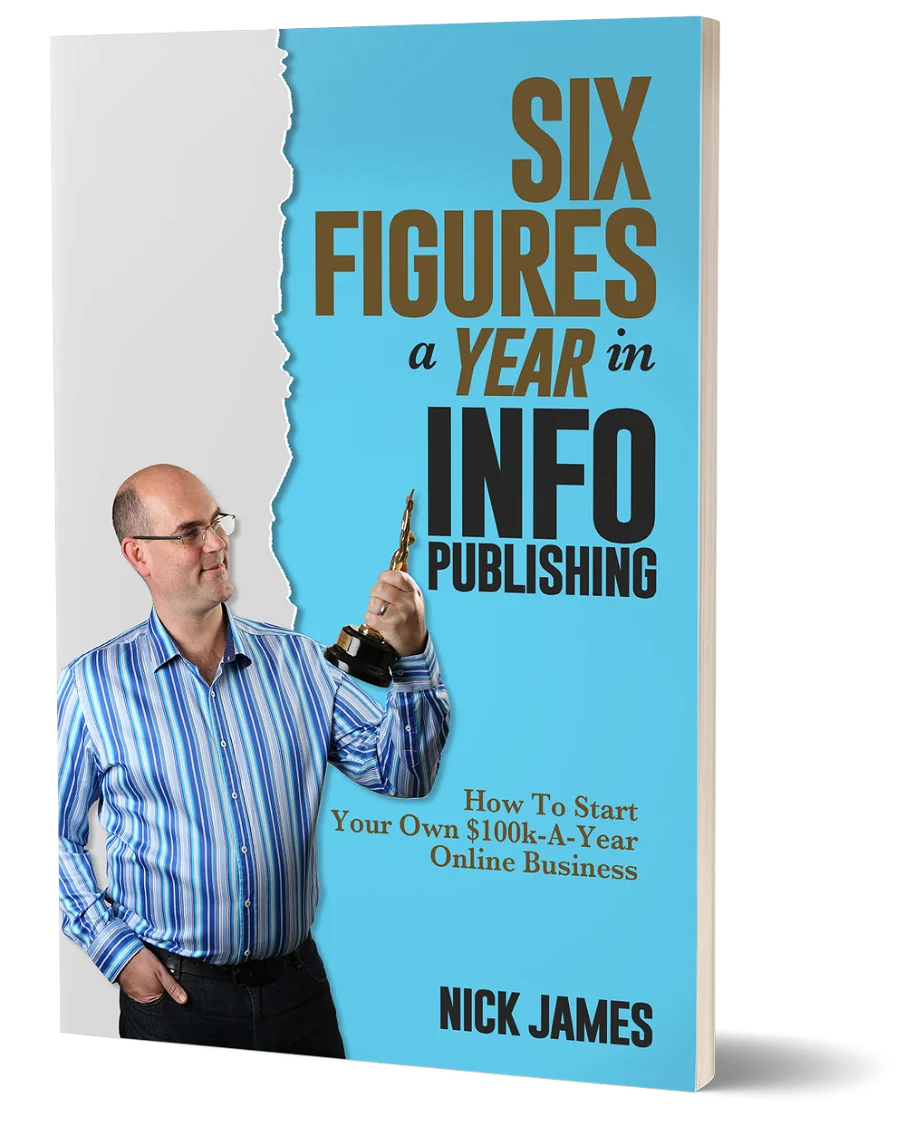
Author offers a FREE copy of this book to his next door neighbor... to prove he's not a drug dealer!
Now claim your FREE COPY.
and follow the step-by-step instructions for making the kind of money (and living the kind of lifestyle) that'll get your neighbors curtains twitching with curiosity!
Enter your details below to discover how to claim your FREE COPY of 'Six Figures A Year In Info Publishing' ...
Privacy Policy : We value your privacy. You can unsubscribe from receiving future emails with 1 click at any time.