The Overlooked Business Assets You’re Wasting Without Realising
Most people believe that building an online business means constantly creating something new. A new course. A new lead magnet. A new platform to learn. It’s a comfortable belief, because it makes slow progress feel like a lack of ideas rather than what it usually is.
It often shows up as a new logo, a rebrand, or a fresh domain name — activity that feels like momentum without actually moving the business forward.
It isn’t true.
Growth is not the problem. Attention is. And the thing most people are missing isn’t a new idea at all. It’s a business asset sitting in a folder they haven’t opened in two years.
I hear “I just don’t have the time” from customers more than almost anything else, and I understand why. Building a business alongside a job, a family and everything else that fills a week doesn’t leave much room to spare. But the assumption underneath that phrase is usually the same one: that moving forward means starting something from a blank page. Often it doesn’t. It means looking properly at what you already own.
The blank page isn’t the problem
Pawnbrokers are good at one particular thing: spotting hidden business assets where everyone else sees clutter. Someone brings in a dusty box from the loft, convinced it’s worth nothing, and walks out having been paid handsomely for it. The object didn’t change. The person looking at it did. Ask most pawnbrokers what they enjoy about the job, and they’ll tell you it’s this moment: watching someone realise what they’ve been sitting on all along.
Online businesses have their own version of that dusty box. Old blog posts nobody has looked at since they published them. Customer emails answered once and then forgotten. A webinar recorded eighteen months ago and never referred to again. None of it looks like an asset while it’s sitting there. All of it usually is.
I’ve mentioned in other articles I have shared recently that the businesses which grow steadily tend to be the ones paying proper attention to what they already have. They aren’t the ones chasing the next platform. This is really the same idea from a different angle.
What’s already sitting in your business
Before spending three weeks building something new, it’s worth spending one afternoon asking a simpler question: what business assets have I already made that I’ve stopped looking at?
A few places worth checking properly:
Old content. A blog post from a year ago can become a short video, an email series, or a handful of social posts. The research is done. Only the format is missing.
Customer questions. If you’ve answered the same query five times by email, that’s not an annoyance. That’s your audience telling you exactly what to build next, in their own words. Copy the question exactly as they asked it and you’ll usually find the outline of your next product sitting right there in their phrasing.
Old recordings. A webinar nobody has revisited might contain the bones of a short course, sitting there fully formed and completely unused. Listen back properly rather than skimming, and note where you slowed down to explain something in more detail. That’s usually the part worth pulling out on its own.
Feedback and testimonials. The language customers use to describe what changed for them is usually better than anything you’d write yourself, because it’s theirs rather than yours. A phrase one customer used off-hand in an email can end up doing more work in your marketing than a paragraph you laboured over.
Put those together and the picture is usually further along than it looks. A folder of client questions about the same feature, a testimonial or two mentioning the same result, and a webinar recorded a year ago on that exact topic isn’t three separate loose ends. It’s most of a short course, already half-written, in three different places at once.
None of it looks like an asset while it’s sitting there. All of it usually is.
Why this gets skipped
It gets skipped because reviewing old material doesn’t feel like progress. There’s no rush of starting something. It feels like tidying rather than building.
I’d push back on that gently. I spend a fair amount of my week doing exactly this kind of unglamorous checking. Correcting a typo in a customer’s opt-in details, tracing why an invoice looks odd, reading through old support threads before writing a new one. None of it feels dramatic. It’s also where I notice the same problem coming up again and again, which tells me something worth acting on, and it’s rarely something I’d have spotted by sitting down to write something new instead.
Take the customer questions above. Five people asking about the same thing feels like a support burden in the moment. Treated properly, it’s market research you didn’t have to pay for, and a product outline already written in someone else’s words.
The instinct to always create rather than review is understandable. It’s also, in my experience, the slower route. The business assets are usually already there; the review is what makes them visible.
A small, honest way to start
You don’t need a full audit.
You need one afternoon.
Pull up your last ten pieces of published content and your last month of customer emails. Read them properly, not skimming for typos but looking for the question that keeps repeating. Underline it when you find it.
That underlined question is your next small product, your next piece of content, or your next email. It was never missing. It was just unread.
This is also, quietly, the same principle behind licensing existing material rather than starting from nothing. Someone else has already built the thing; the value is in recognising it and putting it to proper use rather than reinventing it.
If that idea appeals to you, Nick James put together Product Licensing Formula, which walks through exactly that approach. It covers how to find products that already exist, secure the rights to use them, and build something of your own around material you didn’t have to create from scratch. It won’t do the noticing for you, but if you’ve read this far and thought “I could use a proper system for this,” it’s a sensible next step.
Product Licensing Formula is worth a look if the idea of building on what already exists, rather than starting again every time, sounds more like how you’d want to work.
Either way, before you open a blank document this week, open the folder instead.
The dusty box on the shelf is usually worth more than anyone standing in front of it realises.
Best wishes for now,
Kate
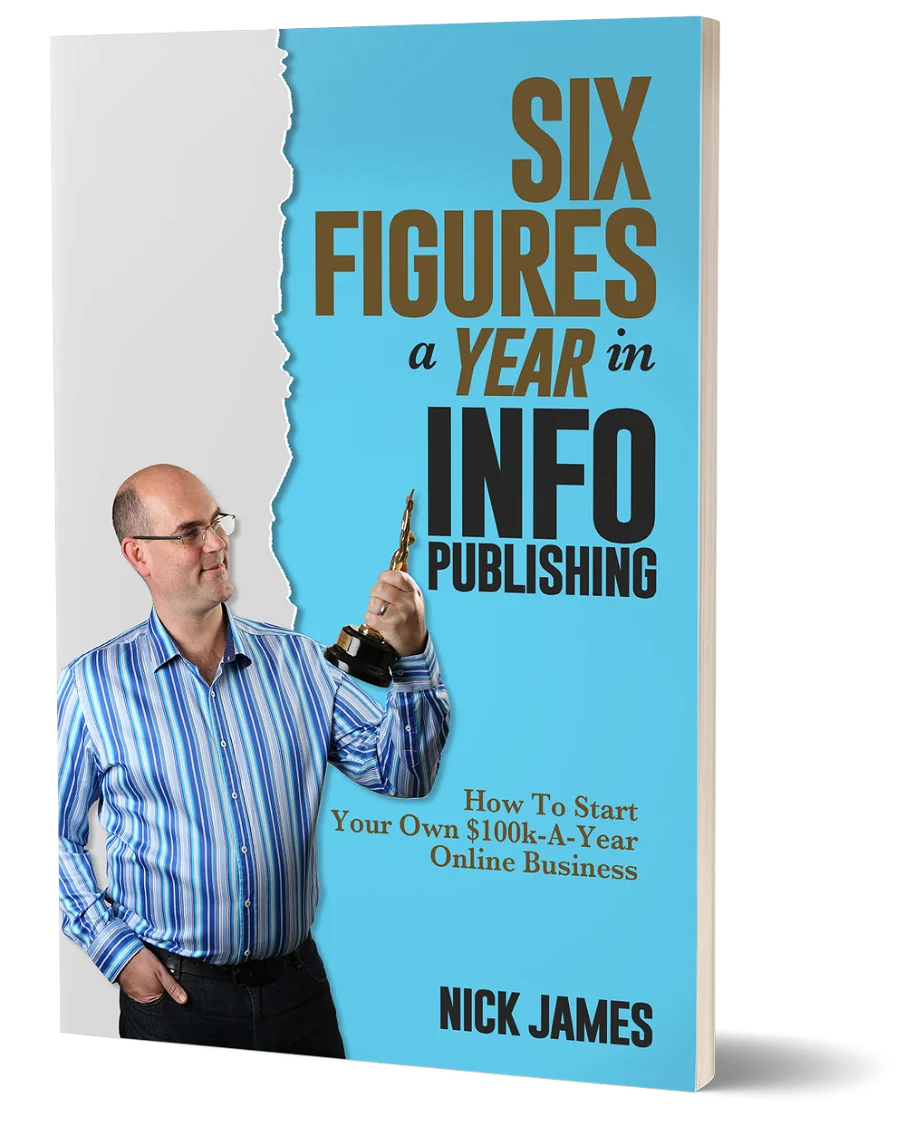
Author offers a FREE copy of this book to his next door neighbor... to prove he's not a drug dealer!
Now claim your FREE COPY.
and follow the step-by-step instructions for making the kind of money (and living the kind of lifestyle) that'll get your neighbors curtains twitching with curiosity!
Enter your details below to discover how to claim your FREE COPY of 'Six Figures A Year In Info Publishing' ...
Privacy Policy : We value your privacy. You can unsubscribe from receiving future emails with 1 click at any time.