Why Are Some Marketers Smart Enough To Spot Overlooked Trends?
“I just don’t have the time.” I hear that from readers more than almost anything else, and I understand it completely. A job already takes ten hours out of your day. Add the actual living of a life, and sitting down to start spotting trends early sounds like a luxury reserved for people with nothing better to do.
Except that is not quite what is happening when someone seems to spot the next opportunity before everyone else does. They joined a platform while it was still clunky. They started a newsletter before inbox publishing was fashionable.
They were talking about a shift in how people search for information months before anyone else noticed it.
They are not psychic, and they are not working longer hours than you. They have simply trained themselves to notice things that most people scroll straight past. That is a habit, not a personality trait, and it is one you can build without adding a single hour to your week.
Curiosity Is Not Optional
The people who consistently spot opportunities early share one trait before anything else: they do not stay inside their own patch.
They read outside their niche. They watch what is happening in industries that have nothing to do with theirs. They ask, almost automatically, “what happens if this keeps growing?”
Most of us do the opposite without meaning to. We follow the same five people, read the same handful of sites, and mistake familiarity for information.
It feels efficient. It is a fairly reliable way to be the last person to notice anything worth noticing.
I think the fix here is smaller than people expect. You do not need to overhaul your reading habits. You need one deliberate crack in the wall, opened on purpose, every week.
Look Outside Your Own Feed
A simple test: spend part of one afternoon a week somewhere you would not normally look. A newsletter that has nothing to do with your business, or a discussion thread on a platform you never use.
Watch for a question that keeps coming up in comments, asked in slightly different words by different people each time. That is often where spotting trends early begins.
Trends rarely arrive as headlines. They arrive as small, unrelated conversations happening in places you were not paying attention to, long before anyone bundles them into a story worth publishing.
That is the actual skill. Not brilliance, and not being first to a platform because you happened to get lucky. It is a slightly wider field of view than everyone else’s, kept wide on purpose rather than by accident.
I have covered other angles on building an online business worth building in recent articles, and this one keeps coming back around because it applies to almost every decision you will make in this line of work.
Experiment While It Still Looks Unfinished
Noticing something early is only half of it. The people who benefit from what they notice are usually also willing to try it while it is still rough around the edges, rather than waiting for it to be polished and crowded.
Most experiments like this go nowhere. That is not a failure, it is the cost of the exercise. It only takes one to put you a year or two ahead of everyone still waiting for permission.
I think this is where a lot of people who have “tried a few things already” get stuck. They tried the thing everyone else had already found, at the point everyone else had already found it, and were disappointed when it behaved exactly as crowded as it looked.
That is not the same as a method failing you. It is timing, and timing is something you can influence, once you know to look for it.
Build A Network Instead Of A Single Source
People who spot things early rarely rely on one place for information. They follow a spread of creators, small newsletters, forums and the occasional unrelated hobby community.
They pay attention when the same idea shows up in more than one of those places without anyone coordinating it.
That is the actual signal worth trusting: not one loud voice saying something is the future, but several unconnected, ordinary sources mentioning the same small thing without knowing the others are talking about it too.
You do not need dozens of sources for spotting trends early to work. Three or four, chosen deliberately and different enough from each other, tell you more than fifty accounts saying the same thing.
The Difference Between Noticing And Doing
None of this matters if noticing becomes the whole activity. I have seen people build an impressively well informed picture of where things are heading and never once act on any of it.
The acting part felt to them like a separate, harder skill they had not got round to yet.
It is not a separate skill. It is the same one hour a week, spent slightly differently.
Instead of only reading outside your niche, pick one small thing from what you noticed and test it quietly.
Use a scale that costs you almost nothing if it goes nowhere.
A short trial works well. A single post written in a format you have not used before, or one conversation started somewhere you do not normally spend time.
That is the whole commitment, well within reach of someone who does not have spare hours to give away.
The point was never to predict the future perfectly. Nobody does that reliably, and anyone claiming otherwise is usually selling something. Spotting trends early means noticing slightly sooner than most people bother to, and being willing to act on it while it still looks unfinished.
That is a habit available to anyone reading this, whatever stage you are at.
It costs you an afternoon a week you were probably going to spend re-reading the same five accounts anyway.
Best wishes as always,
Kate
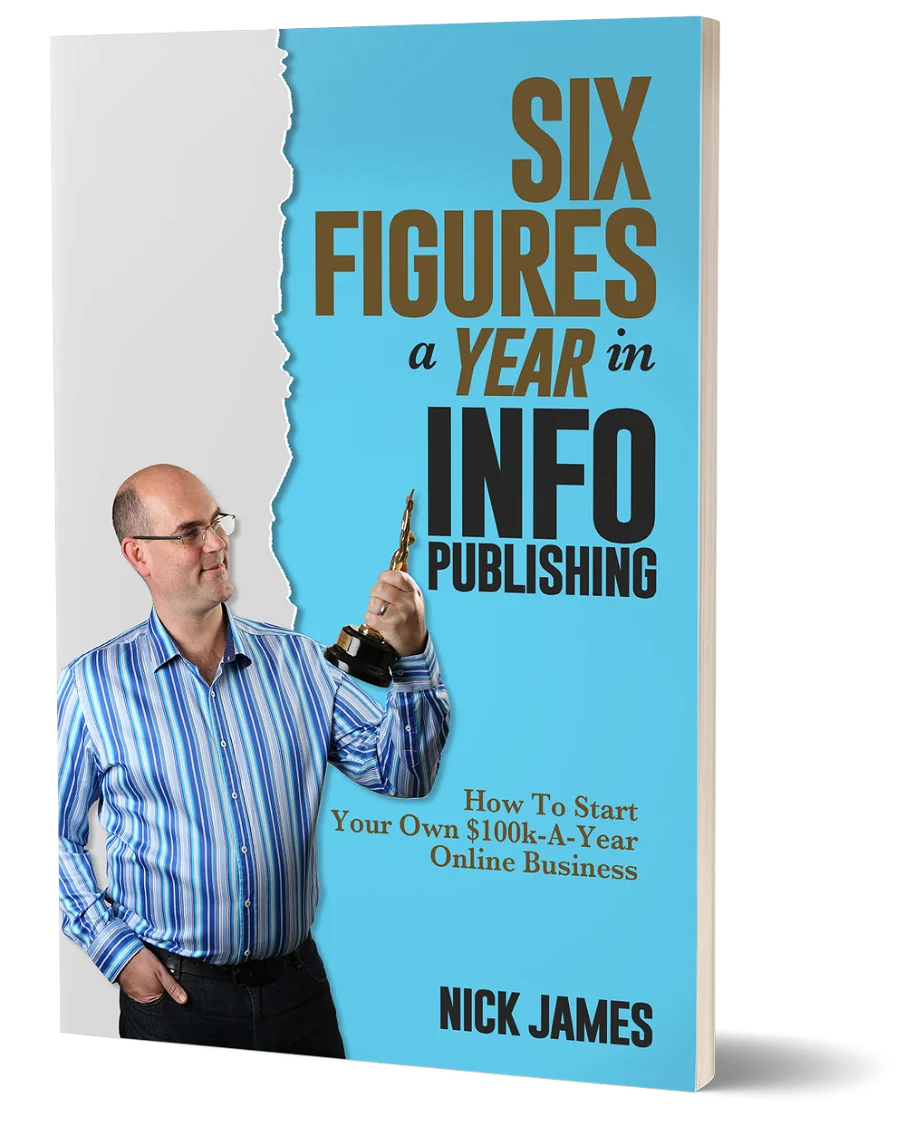
Author offers a FREE copy of this book to his next door neighbor... to prove he's not a drug dealer!
Now claim your FREE COPY.
and follow the step-by-step instructions for making the kind of money (and living the kind of lifestyle) that'll get your neighbors curtains twitching with curiosity!
Enter your details below to discover how to claim your FREE COPY of 'Six Figures A Year In Info Publishing' ...
Privacy Policy : We value your privacy. You can unsubscribe from receiving future emails with 1 click at any time.