How To Stop People Overlooking What You Sell
Somebody scrolls past your page, reads the one line you wrote about what you do, and moves on without a second thought.
You didn’t do anything wrong exactly. They simply couldn’t tell, quickly enough, what you sell.
That used to only cost you a slow reader. Now it costs you something else too. AI assistants are starting to answer questions like “what’s the best email tool for a small list” before a single person ever visits a website. If the assistant can’t work out what you sell, it recommends somebody else instead.
“I just don’t have the time” is the reason most people give me for never fixing this. Fair enough. But the fix is smaller than you think, and it works whether the reader is a person with thirty seconds to spare, or a piece of software with none.
Why Clarity Now Matters To A Machine As Well As A Person
For years, being unclear about what you sell mostly cost you customers who gave up reading halfway down the page. That’s still true.
But there’s a new reader in the room. People are increasingly asking AI tools to compare tools, prices and services, then buying whatever gets recommended without ever landing on a website themselves.
If your pricing, your offer and who it’s for aren’t written down somewhere plainly, the AI has nothing to work with. It moves on to a competitor whose page says it in one clean sentence, whether or not that competitor’s offer is any better than yours.
I don’t think this changes what good marketing looks like. I think it makes the case for it harder to ignore.
Picture someone typing “best email tool for a small list” into an AI assistant instead of a search bar. The assistant reads a handful of pages, picks out whichever ones state plainly who they’re for and what they cost, and recommends two or three of those. Yours doesn’t get mentioned, not because it’s worse, but because nothing on the page told the assistant what to say about it.
The Cost Of Assuming People Will Work It Out
Somebody once sent me a Facebook friend request with no message attached. When I asked how we knew each other, he said Facebook had just suggested it. When I asked what he needed from me, he said nothing in particular.
He’d reached out without ever explaining why, much as plenty of websites expect a stranger to work out what’s on offer without being told plainly. I asked him outright what he wanted. By the end of it, he’d withdrawn the request.
It wasn’t really about Facebook. It’s the same thing that happens on a business’s own website every day.
Somebody arrives, is expected to work out what you’re offering and why it matters to them. They quietly leave rather than do the work for you.
An AI assistant does the same thing, just faster and without the awkward exchange first. It doesn’t ask a follow-up question. It simply looks somewhere else.
Three Things Any Reader Needs To Know In Ten Seconds
Whether it’s a person or a piece of software checking your page, the same three questions get asked. What is this. Who is it for. What does it cost, roughly.
What it is. Say the thing plainly, in the first sentence, without the story first. Not “helping ambitious people succeed,” but “a monthly newsletter for people who want to earn extra income from home.”
Who it’s for. Name the person, not everyone. “For anyone” reads to a machine, and to most people, as for nobody in particular. “For men over 40 looking for a way out of the 9-to-5” tells both a reader and an assistant exactly who should keep reading.
What it costs. A price range, written down somewhere you can point to. Vague pricing gets skipped by AI tools the same way it gets skipped by a browser closing your tab. A number, even an approximate one, is worth more than a page of reassurance without one.
None of this needs new writing talent. It needs the same sentence you’d say out loud to a friend, written down instead of assumed.
What This Looks Like In Practice
Compare two versions of the same sentence.
Vague: “Helping people build a better life through online business.”
Clear: “A weekly newsletter for people over 40 who want a second income outside their current job, with a monthly subscription price stated clearly.”
The second version tells a person what to expect before they read another word. It also gives an AI assistant everything it needs to decide whether to mention you at all: audience, format, price.
Nobody’s business becomes less interesting for saying it this plainly. If anything, the specific version sounds more like something a real person built, because it is.
The same test applies to a headline, a bio, or an about page. Read it back and ask whether a stranger, or a piece of software, would know within the first line what you’re offering and to whom. If the answer is no, the sentence needs rewriting before anything else on the page gets touched.
Where To Start This Week
Pick the one page most people land on first. Read it as though you’d never heard of your own business before. Notice where you have to keep reading before the offer becomes clear, because that gap is exactly what a rushed reader, or an AI assistant skimming for an answer, will not wait for.
Somewhere in other articles I’ve shared recently, I’ve made a similar point about doing things properly rather than adequately. This is the same habit, aimed at a slightly newer audience.
If the answer to what, who and cost isn’t sitting in the first two sentences, move it there. Nothing else on the page matters until that’s fixed.
Being unclear used to only cost you a slow reader. Now it costs you a recommendation you never even knew you missed.
That’s the whole shift. Not new copy.
Not a new offer. Just saying, plainly, what you already know to be true about what you sell.
If Writing It Plainly Still Feels Hard
Some people know exactly what they sell and still find it hard to put it into a sentence that lands. That’s a copywriting problem, not a clarity-of-thought problem.
Nick James put together a training called One Letter From Retirement. It walks through the exact sentence structures behind copy that gets straight to the point instead of circling it. It’s aimed at people who know their business but freeze at the blank page.
If that’s the bit that’s been holding you back, it’s worth a look. Nobody needs to be a natural writer to be a clear one.
That’s the only difference clarity asks for: not more confidence, not a better personality on the page, just the plain sentence written down where a reader, human or otherwise, can find it in the first few seconds.
You don’t need a rewrite of everything you’ve built. You need one honest sentence at the top of the page that says what you sell, who it’s for, and roughly what it costs.
Do that this week, and you’ll stop losing readers, and recommendations, to a gap that was never really about talent.
Best wishes for now,
Kate
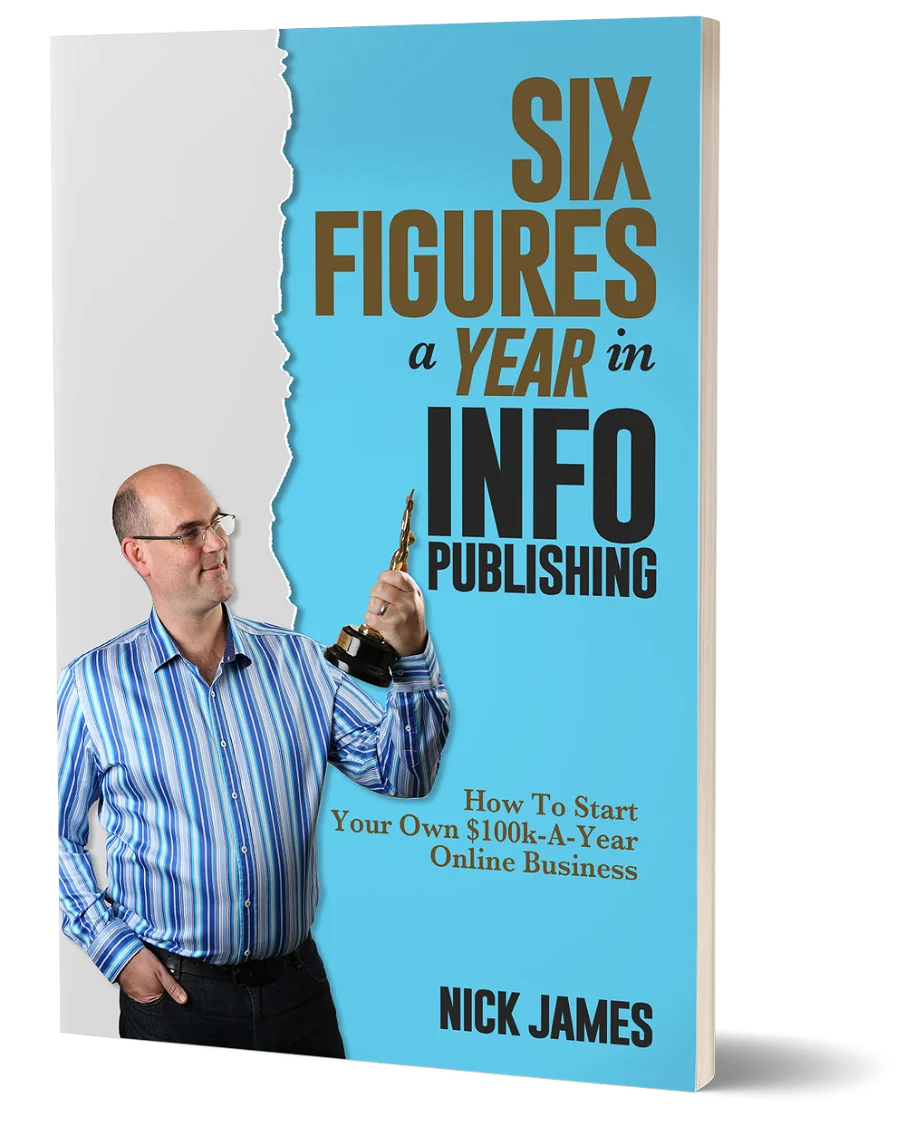
Author offers a FREE copy of this book to his next door neighbor... to prove he's not a drug dealer!
Now claim your FREE COPY.
and follow the step-by-step instructions for making the kind of money (and living the kind of lifestyle) that'll get your neighbors curtains twitching with curiosity!
Enter your details below to discover how to claim your FREE COPY of 'Six Figures A Year In Info Publishing' ...
Privacy Policy : We value your privacy. You can unsubscribe from receiving future emails with 1 click at any time.