
Is Your Business Clear Enough for AI to Discover It?
I just don’t have the time. That is what most people tell me when I ask why their website still reads like a rough draft. They are busy, not lazy, and clarity feels like the job you get to once everything else is sorted.
Here is the problem with waiting. If someone asked ChatGPT or Gemini for help with exactly what you offer, right now, would your business even get a mention? That gap between existing and being findable is where most small businesses quietly lose ground to competitors who said the same thing, just more clearly.
Most people assume that once they have a website, they are already visible. AI search visibility does not work that way.
The assistants your customers are now asking for recommendations are quietly deciding whether you exist at all. Most businesses never find out until it costs them something.
The Three-Second Test
You do not need software for this. You need ten minutes and a notepad, and it is the fastest way to check your AI search visibility today.
Write down ten questions your ideal customer might type into an AI assistant, never using your business name. Think like someone who has never heard of you.
“What should a complete beginner use to start selling online with no list yet?” is a fair example. So is “who explains how to price a digital product properly?”
Now put each one into the AI assistant your customers are most likely to use, and read the answer properly. Are you mentioned? Are your competitors? Which sources does the answer lean on?
Do not panic if the answer is nobody, nowhere, not once. You have just found out something useful, and most business owners never bother to find it out at all.
Say you run a small bookkeeping service for freelancers. You ask an AI assistant who helps freelancers with their bookkeeping, and it names two national chains and a forum thread, never you.
That is not a reason to panic. It is a reason to start writing down, in plain language, exactly what you do and who it is for. That way there is something for the assistant to find next time it looks.
The fix is not complicated. It is writing down, in your customers’ own words, what they are actually asking for, rather than what you assumed they wanted to hear.
Write the Questions Before You Write the Content
I spent fourteen years in recruitment before I spent fourteen in this business. The one habit that carried across both was simple: write down exactly what the other person is asking for, in their own words, before you decide what to offer them.
A client never said “find me a candidate.” They said “someone who can start Monday and already knows NHS systems.”
The vague version gets you nowhere. The specific one tells you precisely what to go and find.
Specific is what gets remembered. Vague is what gets scrolled past.
Your ten questions do the same job. They stop you writing content aimed at everyone, which is the surest way to be found by no one in particular.
This matters more than it sounds like it should. A freelance bookkeeper writing “I help with your finances” is competing with every other sentence exactly like it on the internet. A freelance bookkeeper writing something precise about quarterly VAT returns for freelance designers is competing with almost nobody.
What AI Actually Checks
An AI assistant rarely answers from your homepage alone. It looks at reviews, forums, comparison pages, interviews and other sites that already mention you. If none of that exists, a page saying “we’re the best” will not move the needle much.
That is a slightly different problem to solve than simply writing more. It means being mentioned somewhere other than your own site matters more than it used to. A guest article, a genuine review, a mention in someone else’s newsletter, all count for something here.
This is why a single credible mention outside your own site can matter more than another week spent polishing your homepage copy. A short guest post on a site your customers already trust, or a review from someone who used what you offer, gives the assistant something external to check your claims against.
Think of it like a reference check. Nobody hires on the strength of a candidate’s own description of themselves, and an AI assistant treats your website much the same way. It wants a second source confirming what you claim.
I wrote a little more on building that kind of quiet credibility in other articles I have shared recently, if the idea is new to you.
None of this needs to be complicated. It needs to be true. And it needs to be stated plainly enough that a machine, as well as a person, can repeat it back correctly.
Make Your Business Impossible to Misunderstand
A useful exercise here is building what I would call a plain-facts page, written for yourself first.
One sentence for who you are. One for who you help. One for what you provide.
One more for why anyone should believe you.
Read your own answers back. If they sound like they could belong to any business in your niche, they are not finished yet.
Try it with specifics instead of categories. Not “I help people start a business,” but “I show freelance bookkeepers how to price their first ten clients without underselling themselves.” The second sentence could only describe one kind of business.
I have read a great many “about” pages over the years, mine included, and the ones that work are never the cleverest. They are simply the clearest about what is on offer and to whom.
Your audience and the assistant they are asking both want the same thing from you: one clear answer, not three vague ones dressed up differently.
Start With Ten, Not Thirty
You do not need thirty questions this week. Ten is enough to discover whether your business shows up anywhere worth showing up in.
For each gap you find, do one small thing about it. Answer the question properly on your own site. Mention it clearly in your bio.
Ask someone whose audience overlaps with yours whether they would consider a mention. None of this needs a marketing budget. A clearer paragraph on your own site costs nothing but time.
A genuine mention from someone else costs a conversation, not a fee. The business found by an AI assistant a year from now is rarely the one that spent the most. It is the one that answered the obvious questions clearly enough, often enough, in enough places, that there was something to point to.
Then rerun the same ten questions in a month. You are not trying to win every search overnight. You are trying to stop being the business nobody mentions, which is a far more solvable problem than it first appears.
Small, consistent fixes beat one dramatic rewrite. A paragraph corrected this month, a mention earned next month, adds up faster than people expect.
That is what checking your AI search visibility properly gives you: not proof you are invisible forever, just today’s starting point.
Being overlooked by an algorithm is rarely personal. It is usually just a sign that nobody has told it, or your reader, exactly who you are yet. That part is entirely within your control.
Best wishes for now,
Kate
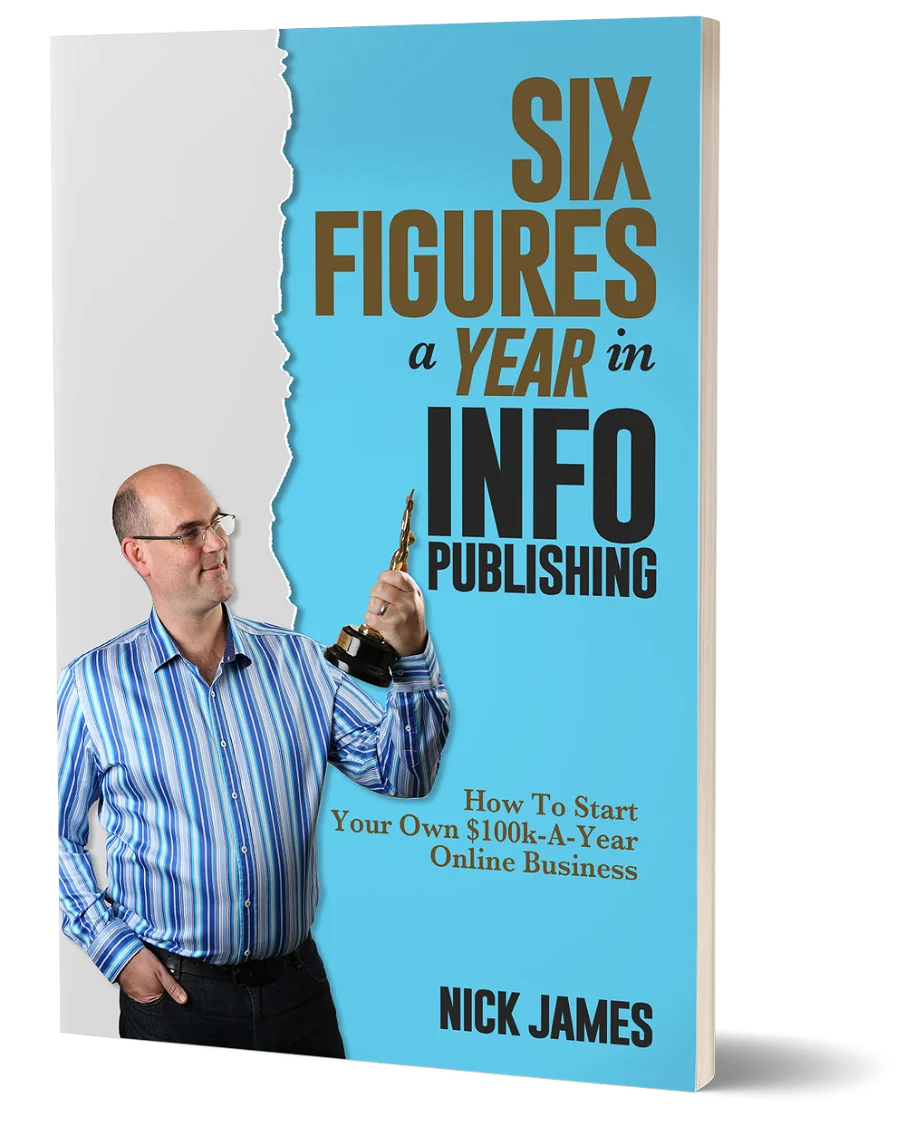
Author offers a FREE copy of this book to his next door neighbor... to prove he's not a drug dealer!
Now claim your FREE COPY.
and follow the step-by-step instructions for making the kind of money (and living the kind of lifestyle) that'll get your neighbors curtains twitching with curiosity!
Enter your details below to discover how to claim your FREE COPY of 'Six Figures A Year In Info Publishing' ...
Privacy Policy : We value your privacy. You can unsubscribe from receiving future emails with 1 click at any time.