
What’s The Overlooked Reason Your Subscribers Stay Silent?
You send the email. The numbers climb for an hour, then flatten out the way they always do. Nobody replies. Nobody clicks reply to say what they thought, what confused them, or what they would add. It goes out to a list of names and comes back to nothing at all.
Most people running a list assume that is simply what a newsletter sounds like most weeks. The only fix anyone talks about is writing something better next time: a sharper subject line, a punchier opening, one more story.
I do not think that is the real problem. Audience participation, not better writing, is usually the missing piece. A reader who has nothing to do with your email will read it, or skim it, and move on. A reader who is given something to react to, agree with, or argue against will often write back within the hour.
Why Your Best Content Still Gets Ignored
There is a strange pattern in how people respond to what they read online. Ask for help with something and you will often get silence. Say something slightly wrong, with confidence, and people will queue up to correct you.
It sounds like a joke about human nature, but it is worth taking seriously if you send emails for a living, or hope to one day. The lesson is not ‘be wrong on purpose.’ It is that people rarely respond to information. They respond to something they can push back against.
Most newsletters, mine included in the early days, are written like a small lecture. Here is what I think, here is why, here is what to do about it. That format is useful. It is also very easy to read and forget within the hour.
The Difference Between Being Watched And Being Joined
Somewhere in the middle of building a subscriber base, most people work out that being read is not the same as mattering to someone. You can have thousands of opens and almost no relationship with a single one of those readers.
Nobody replies to a lecture, but almost everyone replies to a question.
That single line changed how I write for our own subscribers. I stopped closing emails with a tidy summary and started closing them with something unresolved. A choice between two ways of doing something. A quick, honest question about what they are stuck on this week.
The emails that get replies are rarely the most polished ones. They are the ones that leave a small gap the reader wants to fill.
What This Looks Like In An Ordinary Email List
You do not need a stunt or a big campaign to build audience participation into what you send. It usually comes down to a handful of small habits, repeated often enough that readers start to expect them.
Ask one direct question near the top of an email, and mean it enough to read the replies. Let a subscriber’s own words show up in the next email, credited or not, so people see that writing back changes something. Give people a small choice rather than a single instruction: ‘reply with A or B’ gets you more than ‘let me know your thoughts.’
I have written before about treating a subscriber list as a group of individual people rather than a row of names in a database. I have gone into more detail on the habits behind that in other articles I have shared recently.
The idea underneath is the same one at work here. People notice, quickly, whether you are talking at them or with them.
A Small Example Worth Borrowing
A few years ago a language app killed off its own mascot as a marketing stunt, then told its audience they could bring him back if enough of them completed their lessons. It was a big, expensive version of the same small idea.
Millions of people who had never once replied to a push notification suddenly had a reason to act. They were not being asked to watch something happen, they were being asked to help make it happen.
You will never run a stunt at that scale, and you do not need to. The mechanism scales down perfectly well to a subscriber list of two hundred people. Give them a role, however small, and a surprising number of them will take it.
Small Ways To Invite Your Reader In
Start with your next email rather than a whole new strategy. Pick one section and turn it from a statement into a question. Ask readers to vote, in a single reply, between two options you genuinely have not decided between. Share a short piece of feedback from a previous reply, so the next person can see that theirs would be read too.
None of this needs new software or a redesign of your list. It needs a shift in what you expect a reader to do with what you send them.
Content gets read.
Participation gets remembered.
It will feel strange at first to end an email with a genuine question instead of a firm conclusion. Most of us were taught that confidence sells and uncertainty does not.
An email that leaves a small gap for the reader to fill almost always earns more of their attention. It does more than one that closes every door on the way out.
One Small Change This Week
Look at your next email before you send it. Find the one line that reads like a conclusion, and turn it into a question instead. Send it, and read what comes back.
Audience participation is not a trick you bolt onto marketing that already works. It is the difference between a list that quietly unsubscribes and one that starts, slowly, to feel like a room full of people who know you. People in that room expect to hear back.
Best wishes for now,
Kate
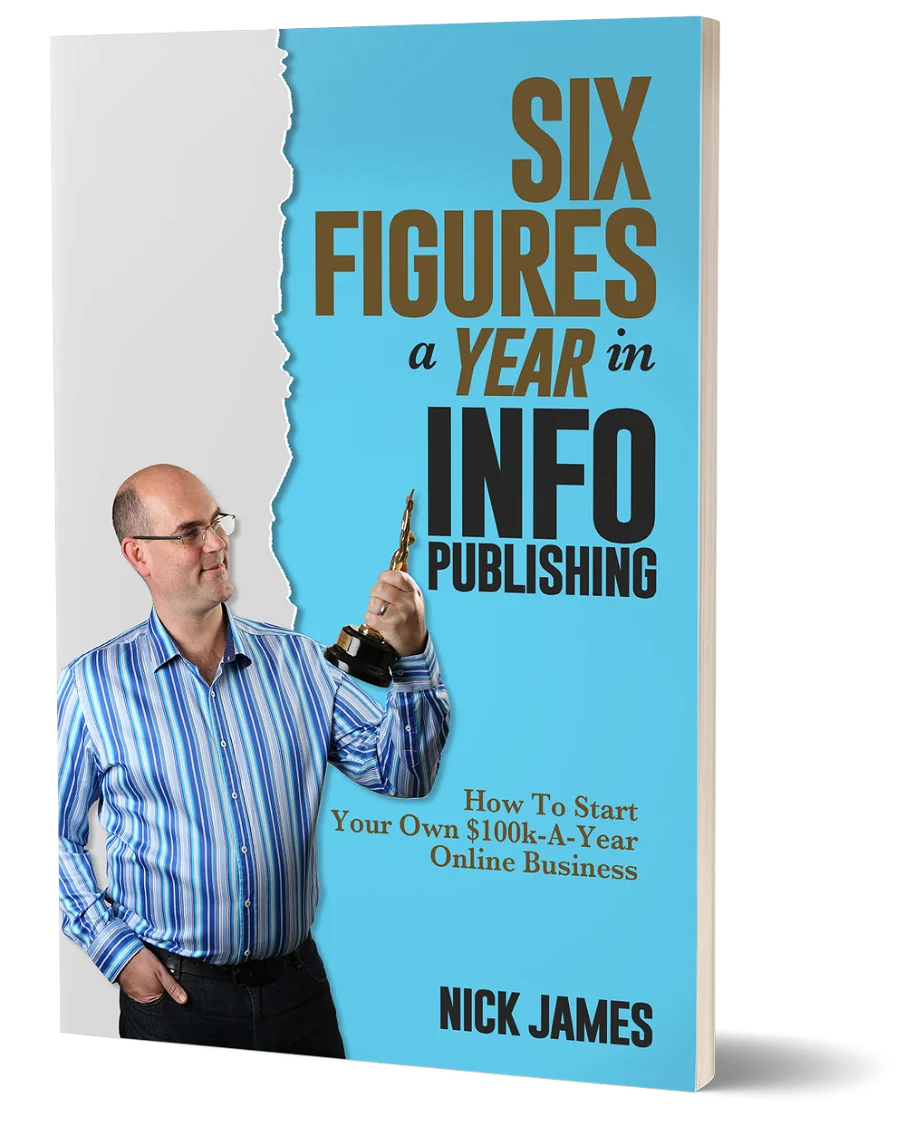
Author offers a FREE copy of this book to his next door neighbor... to prove he's not a drug dealer!
Now claim your FREE COPY.
and follow the step-by-step instructions for making the kind of money (and living the kind of lifestyle) that'll get your neighbors curtains twitching with curiosity!
Enter your details below to discover how to claim your FREE COPY of 'Six Figures A Year In Info Publishing' ...
Privacy Policy : We value your privacy. You can unsubscribe from receiving future emails with 1 click at any time.