The Real Reason Owning Your Audience Beats Renting It
When I worked in recruitment, placing physiotherapists and occupational therapists into the NHS, I kept a database. Much like the one you keep now for your subscribers, except mine had rather more in it than names and phone numbers.
I kept notes on every client I spoke to. Not just the vacancy details. Their children’s names. Their dog’s name. Where they’d been on holiday that year.
It felt like a small thing at the time. It wasn’t.
As a single mother relying on commission, that extra detail decided who got the call. A client with a role to fill rang me first, or rang whoever they’d spoken to most recently. One of those paid my mortgage. The other didn’t.
Nobody taught me to do it. I worked it out because I needed the placements, so I made myself properly interested in the people I was helping.
You have the same choice available to you, and it costs nothing but attention. Every subscriber tells you something about themselves eventually. Whether you write it down is entirely up to you.
Here is why that matters to you. Keeping a clean database you control, and knowing something real about the people in it, matters just as much online today. Do it properly and it pays you back for years.
Which is why ‘I just don’t have the time’ is the objection that stops most people. Time is a real constraint and there is no point pretending otherwise. But this isn’t about finding hours you haven’t got. It’s about where you spend the ones you already have.
You Are Probably Building On Someone Else’s Land
Here is what catches people out, especially early on.
If you rely on social platforms to reach the people who might buy from you, your business sits on borrowed ground. Facebook, Instagram, TikTok, even a Google ranking. Any of them can change the rules on a Tuesday afternoon, and there is nothing you can do about it.
Your reach on Wednesday is not the asset it was on Monday. If a platform quietly drops a feature or reshuffles what it shows people, how do you reach your followers then?
You cannot. That is the whole problem in one sentence. Whatever you have built there, you built it on land you are renting, and the landlord never signed anything.
An email list is different. It isn’t glamorous. Nobody builds a personal brand around a tidy spreadsheet of email addresses. But it is the one channel where the relationship sits with you, not with whichever algorithm happens to be in a good mood.
When I was recruiting I always kept my own contacts, separately from whatever system my employer used. Not out of disloyalty. The relationships were mine, and they were the only thing that travelled with me.
The same applies to you, and it matters more than most people realise.
An audience that knows and trusts you survives an algorithm change. A rented one does not.
So what does owning that audience look like on an ordinary Tuesday morning? Less than you would think, and duller than you would hope.
What It Looks Like On An Ordinary Tuesday
This is where most people quietly give up. Owning an audience sounds like it should mean something dramatic. When it turns out to mean small repeated attention, it feels like a let-down.
It means noticing that a subscriber mentioned they are doing this alongside a full-time job. Then remembering that next time you write to them.
It means replying properly to the person who emails back, rather than firing off a template and hoping they don’t notice.
It means treating your list as individuals you happen to be writing to at once. Not a number on a dashboard that is supposed to go up.
Say someone mentions they are building this around shift work. Six weeks later you mention shift patterns in passing, and they notice. They may not register why. But something shifts in how they read everything you send afterwards.
That is the entire mechanism. Nothing clever about it. Just paying attention, writing it down, and using it later. I have written about this from a few angles recently, and it always comes back to the same unremarkable habit.
So if it is that simple, why does almost nobody do it?
Because It Doesn’t Feel Like Real Work
That is the honest answer.
Writing an email feels productive. You sit down, you produce a thing, you press send. Replying personally to twenty subscribers feels like admin, and admin is what you do when you are avoiding the real job.
Except it isn’t admin. It is the actual business, and everything else you do sits downstream of it.
You see this pattern constantly with people who have already tried a few things. They bought a product or two, nothing much happened, and the conclusion was ‘nobody helped me’.
Sometimes that is fair. Often what happened is that one email went out, nothing came back, and the list was never really spoken to as people. A list you haven’t spoken to properly isn’t an asset. It’s a spreadsheet.
Turning one into the other takes no software and no particular talent. Here is what it does take.
The Habit That Does The Work
You don’t need a system with dozens of moving parts. You need a way of noticing things and somewhere to put them.
A simple note against a subscriber’s name will do. What they are stuck on. What they have bought. Something they said in a reply that told you who they are.
I still keep a version of the notes I kept in recruitment. The habit that protected my commission then is the same one that keeps people opening my emails now.
Then write to them like a person. Short paragraphs of something useful beat long polished newsletters that say very little. Ask a real question now and then, and read the replies properly when they arrive.
That is the whole method. It compounds in a way that is hard to see week by week, which is exactly why so few people stick with it.
Give it three months and you will notice the difference in your replies. Give it a year and you will have something no platform can take away from you.
What You Get For The Trouble
The person who opened your third email is more likely to open your thirtieth. By the time you recommend something, you are not a stranger with a link. You are someone who turned up consistently and paid attention along the way.
That is worth more than reach on a platform you don’t control. It also survives things that reach does not.
If you want a proper walk-through of this, from the first sign-up onward, Lazy Way To Email Riches is worth a look. It covers what to send and how often, without needing to be a natural salesperson about it.
Nobody is suggesting it builds your list for you. But if your gap is the ‘what on earth do I send them’ part, it is a sensible place to start.
None of this needs to be complicated. It needs to be consistent. And it needs you to treat the people on the other end as people, rather than a number that is meant to go up. I learned that protecting my own income long before I wrote an email newsletter, and it has held up every time since.
Best wishes for now,
Kate
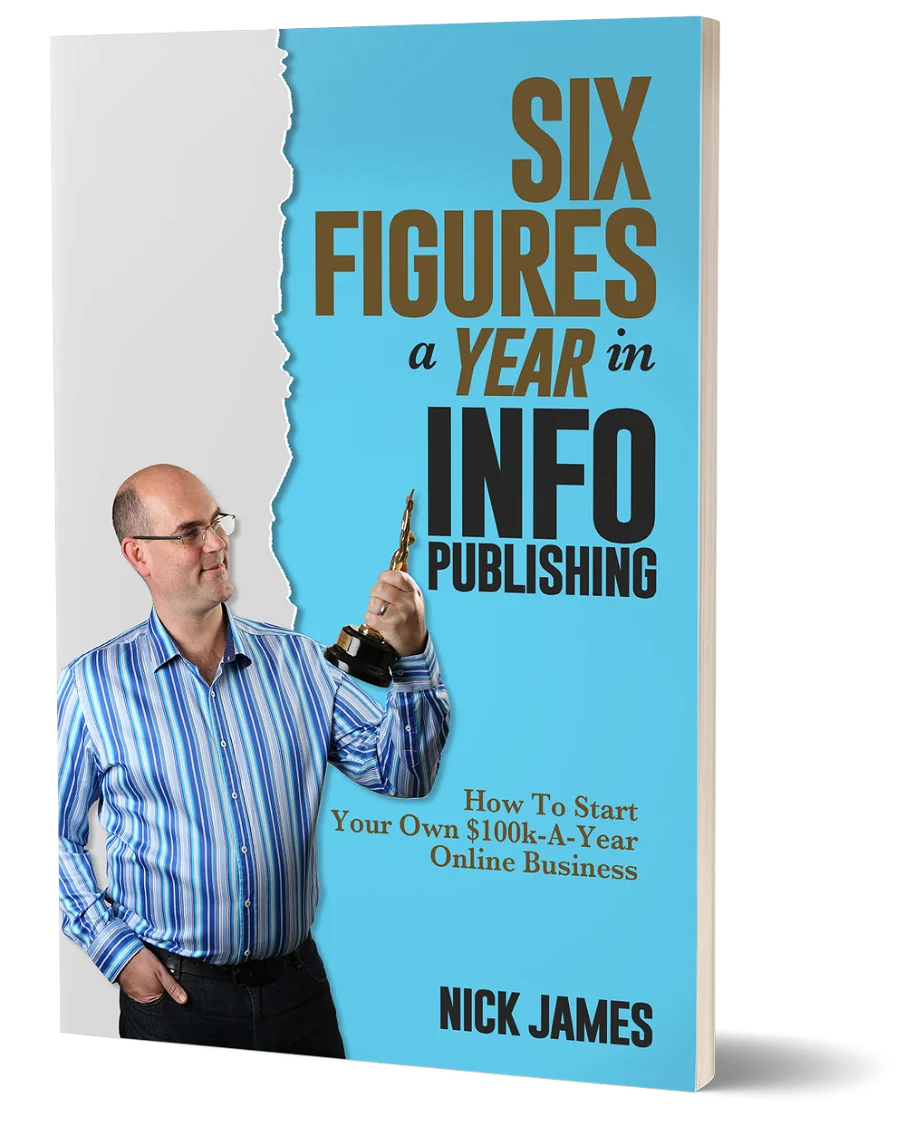
Author offers a FREE copy of this book to his next door neighbor... to prove he's not a drug dealer!
Now claim your FREE COPY.
and follow the step-by-step instructions for making the kind of money (and living the kind of lifestyle) that'll get your neighbors curtains twitching with curiosity!
Enter your details below to discover how to claim your FREE COPY of 'Six Figures A Year In Info Publishing' ...
Privacy Policy : We value your privacy. You can unsubscribe from receiving future emails with 1 click at any time.